

12 Best SAP Concur Alternatives in 2026: Compared & Ranked



TLDR;
- Modern Concur alternatives split into three categories: Unified T&E (ITILITE, Navan), Travel-First (TravelPerk, Spotnana, Egencia), and Expense-First (Ramp, Brex, Emburse, Expensify, Sage Expense Management, Zoho Expense, Coupa).
- Companies most commonly replace Concur because of its complex UI, per-transaction pricing, lengthy implementation cycles, and slower AI innovation compared to newer platforms.
- Mid-market companies increasingly prefer unified travel and expense platforms to reduce tool sprawl, improve traveler adoption, and lower total cost of ownership.
- Choose based on your primary need: ITILITE or Navan for all-in-one T&E, TravelPerk or Egencia for travel-heavy programs, Ramp or Brex for finance-led spend management, Emburse for complex policies, and Coupa for procurement-driven enterprises.


The best SAP Concur alternatives in 2026 are ITILITE, Navan, Ramp, Brex, and TravelPerk - each pairing modern travel booking with automated expense management at a lower price than Concur's per-transaction model. This guide compares 12 platforms on pricing, AI features, support, and integrations so you can shortlist in under 10 minutes.
We have a dog in the fight. We are ITILITE - a travel and expense management platform. Yes, we are writing a list of alternatives to SAP Concur, and yes, we are on that list. You might think we are biased. And honestly? We are. We believe we have built something better. But we also know we aren't the perfect fit for every company. You pick a tool based on your needs.
If you are currently using Concur or just outgrowing your current setup, this guide breaks down the 12 best options, where they win, and where they fall short.
12 SAP Concur alternatives at a glance
How we evaluated
We built the shortlist from three signals:
- Who shows up most often when buyers search "Concur alternatives"
- Who actually wins replacement deals against Concur in the mid-market and enterprise
- Which platforms cover both halves of the T&E job (travel booking and expense management) on a single platform.
Each tool is scored on six criteria, weighted by what mid-market and enterprise buyers told us mattered most:
- Travel inventory depth: NDC, GDS coverage, hotel rates (20%)
- Expense automation: OCR, AI categorization, policy enforcement (20%)
- Total cost of ownership: List price, implementation fees, support fees (15%)
- Mobile and user experience: G2 ease-of-use, mobile-first workflows (15%)
- Integration depth: ERP, accounting, HRIS, corporate cards (15%)
- Support model: Response times, free vs paid, 24×7 vs business hours (15%)
Why companies are leaving SAP Concur in 2026
Concur dominated corporate T&E for two decades. The complaints buyers cite when they shortlist replacements break down into four patterns.
- The interface is dated: On Concur's own community forum, users describe submitting a $1,000 expense report taking 3+ hours, and "thirty-seven clicks required to do anything". The redesigned UI hasn't fixed it: a separate community thread called the new interface "clunky, slow, and inefficient". Trustpilot scores Concur 1.4 out of 5.
- The pricing model is per-transaction: Concur charges by expense report, with support fees on top. For a 500-employee company submitting 5,000 reports a year, the math gets ugly fast. Modern alternatives charge a flat per-user or per-trip fee, predictable and roughly half the all-in cost.
- Implementation runs $3K–$10K, then 60–90 days: Most modern T&E platforms get a mid-market customer live in 1–2 weeks at zero implementation fee. Concur's professional-services model is a leftover from the SAP enterprise sales motion.
- AI capabilities lag: Concur added some AI features in 2024–2025 but the core workflows, receipt capture, policy checks, categorization still feel like 2015. Buyers comparing demos in 2026 see voice-driven booking, email-to-expense, and natural-language analytics from competitors and ask why Concur doesn't have them.
If those four points describe your situation, the 12 alternatives below are the shortlist worth working through.
The 12 best SAP Concur alternatives in 2026
1. ITILITE - Best for mid-market companies wanting all-in-one T&E
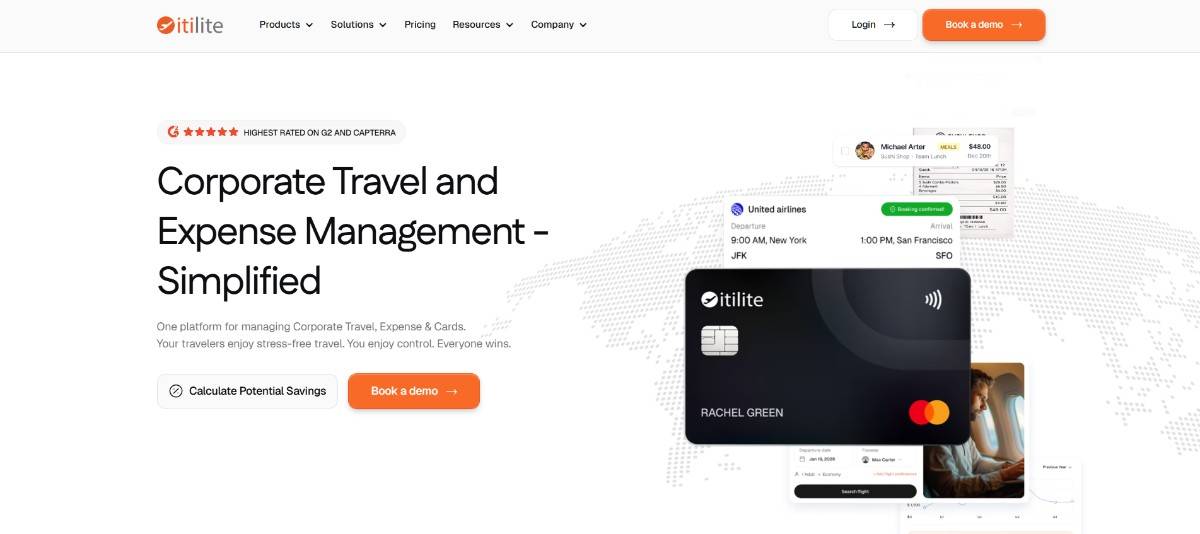
As the authors of this post, we’re obviously fans of what we’ve built. Biases aside, we built ITILITE specifically to solve the frustrations we just mentioned above. ITILITE is a corporate travel, expense management and cards program but with much better user experience, pricing, and support when compared to Concur. If you want modern tech plus the safety net of real human support when things go wrong, we’re a great fit.
Key benefits of ITILITE:
- All-in-one Travel, Expense and Cards: Book business travel, manage expenses, and corporate cards, all in one place. Every transaction syncs with your ERP automatically. Result? Finance saves 100+ hours monthly while getting crystal-clear visibility into every dollar spent.
- Guaranteed savings: We’re not just cheap: we’re confidently cheap. ITILITE guarantees the best hotel and flight rates, period. Better than any platform, anywhere. Our customers pocket an average 23% savings on travel spend from day one. That’s money in your bank account.
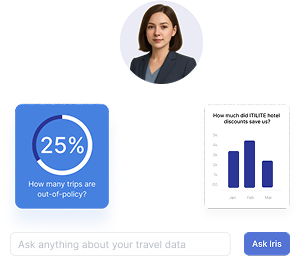
- AI powered recommendations: ITILITE Mastermind tells you exactly the top 3 moves to hit your savings target. It benchmarks you against peers so you know if you’re winning or just participating. Then there’s Iris – your conversational AI analyst who delivers insights and reports on demand. Just ask in plain English.
- Policy Control, as desired: Build policies in minutes, not meetings. Lock down rules by level, travel class, or city – whatever keeps your CFO sleeping soundly. Set approvals your way: by itinerary, cost, or when someone goes rogue off-policy. Total control, zero headaches.
- Human support at $0, anytime: Your travelers stranded at 2 AM, staring at departure boards, absolutely done. They call it ITILITE Support. A real human answers in 30 seconds and books their next flight. Unlimited calls, unlimited support, $0 extra. Because sometimes you just need someone who gets it..
Why customers choose ITILITE over Concur:
- User experience: While we have features at par with Concur, our tool actually “works”. You won't come across any down-times, slow loading times, glitches. ITILITE gets job done – at speed, always
- Reliable Support, free: during any hiccups, there is just one number to dial, one email to reach out to. Your users will never be confused between the “software” and the “travel management company”. Use it as many times as you want during a trip – we cost you $0 additional.
- Simple Pricing: Our prices are flat, without any add ons. Travel is based on the number of trips booked, Expense is based on the number of active users.
For enterprise teams also evaluating Concur, our ITILITE vs Concur breakdown covers the key differences in implementation, cost, and support.
Pricing:
- Travel – $10 per trip
- Expense – $9 per active user per month
- No setup or integration fee
2. Navan
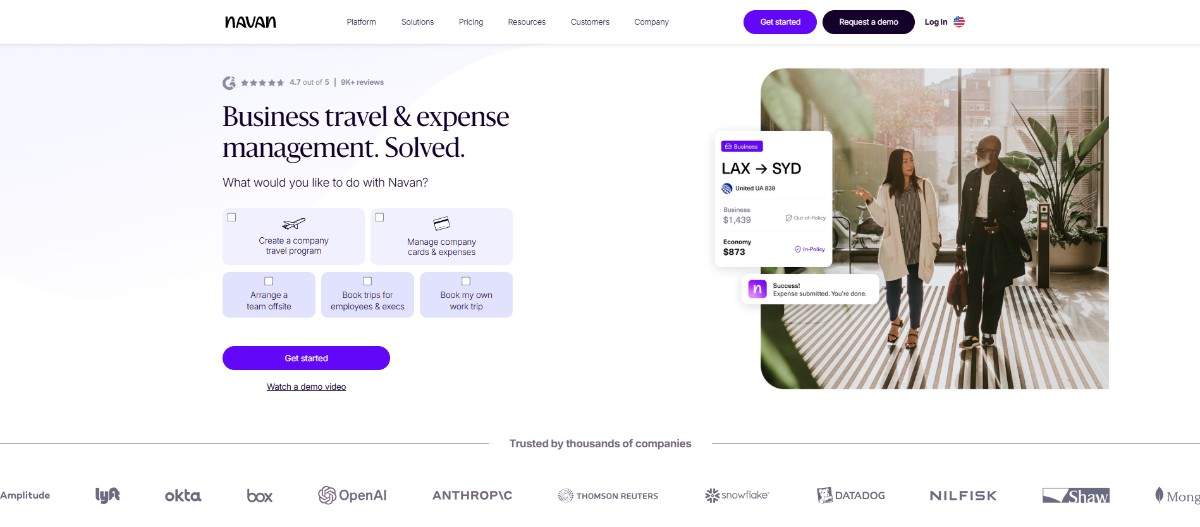
Best for: Travel-led mid-market teams that want rewards and a consumer-grade booking experience.
Navan (formerly TripActions) is one of the strongest travel-first alternatives to Concur. The platform combines modern booking UX with integrated expense workflows and a rewards model that incentivizes travelers to choose lower-cost options.
The biggest differentiator is usability. Navan feels closer to a consumer travel app than a legacy enterprise platform, which improves traveler adoption and policy compliance. The tradeoff is that support leans heavily AI-first, which can frustrate travelers during urgent disruptions.
Pricing: Approximately $15/user/month for the core platform; enterprise pricing custom.
Pros:
- One of the cleanest mobile experiences in T&E
- Strong receipt OCR and expense automation
- Rewards model actively encourages lower-cost bookings
Cons:
- AI-first support layer can frustrate travelers during emergencies
- Hotel inventory depth trails Egencia/Amex GBT globally
- Rewards reconciliation can create extra finance complexity
Migration from Concur: Moderate. Mid-market deployments typically take 2–4 weeks depending on ERP integrations.
G2 rating: 4.7 / 5 (2,000+ reviews as of May 2026).
Concur vs Navan
3. TravelPerk

Best for: International teams needing flexible cancellations and lightweight travel management.
TravelPerk built its reputation around flexibility. Its FlexiPerk feature allows companies to pay a premium for near-universal cancellation flexibility, making it especially attractive for consulting, sales, and event-heavy travel programs.
The platform performs best for companies that primarily need travel management rather than a full travel-and-expense stack. Expense management still depends on integrations with partners like Expensify or Spendesk.
Pricing: Free starter tier; Premium starts at $99/month + $15/booking; Pro custom.
Pros:
- FlexiPerk is genuinely valuable for high-change travel programs
- Strong European rail and hotel inventory
- Fast onboarding and easy rollout
Cons:
- Per-booking pricing becomes expensive at scale
- US inventory is thinner than Amex GBT
- Not a true all-in-one T&E platform
Migration from Concur: Easy to moderate. Travel-only migrations can go live in under 2 weeks.
G2 rating: 4.6 / 5 (1,500+ reviews as of May 2026).
Concur vs TravelPerk
4. Spotnana
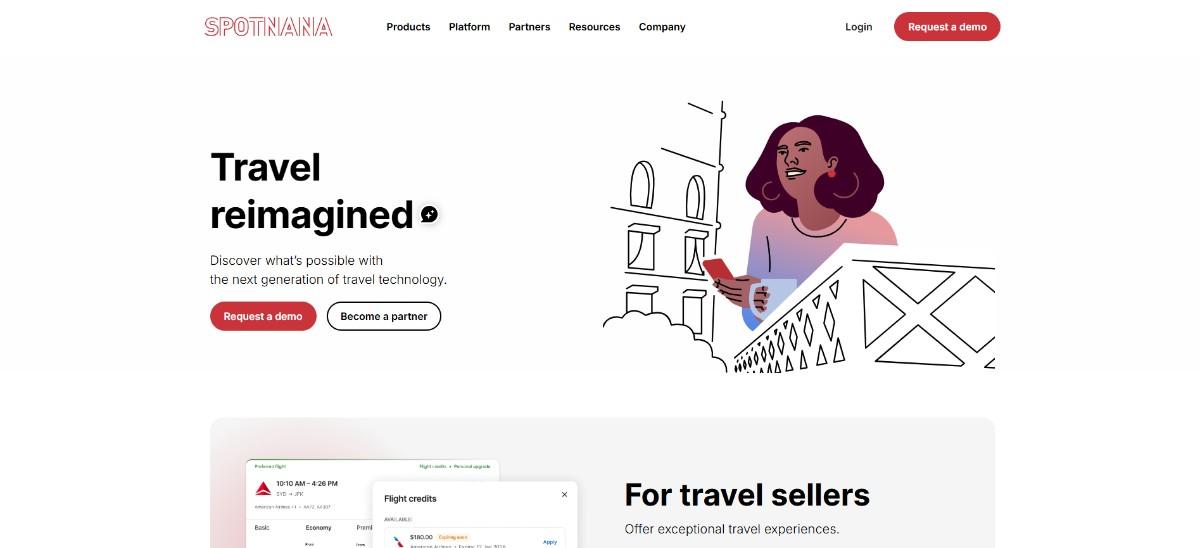
Best for: Enterprises wanting API-first, NDC-powered travel infrastructure.
Spotnana is less a traditional travel-management platform and more a modern travel infrastructure layer. It powers travel experiences behind companies like Brex and Ramp and focuses heavily on NDC inventory, APIs, and extensibility.
Unlike traditional T&E tools, Spotnana is designed for enterprises embedding travel into broader finance or banking ecosystems. That flexibility comes with implementation complexity.
Pricing: Custom enterprise pricing.
Pros:
- Modern API-first architecture
- Best-in-class NDC airline inventory depth
- Strong policy and approval infrastructure
Cons:
- No native expense-management module
- Requires technical implementation resources
- Limited SMB suitability
Migration from Concur: Moderate to complex. Enterprise rollouts often depend on custom integrations.
G2 rating: Emerging vendor with limited review volume compared to legacy platforms.
Concur vs Spotnana
5. Egencia (Amex GBT)
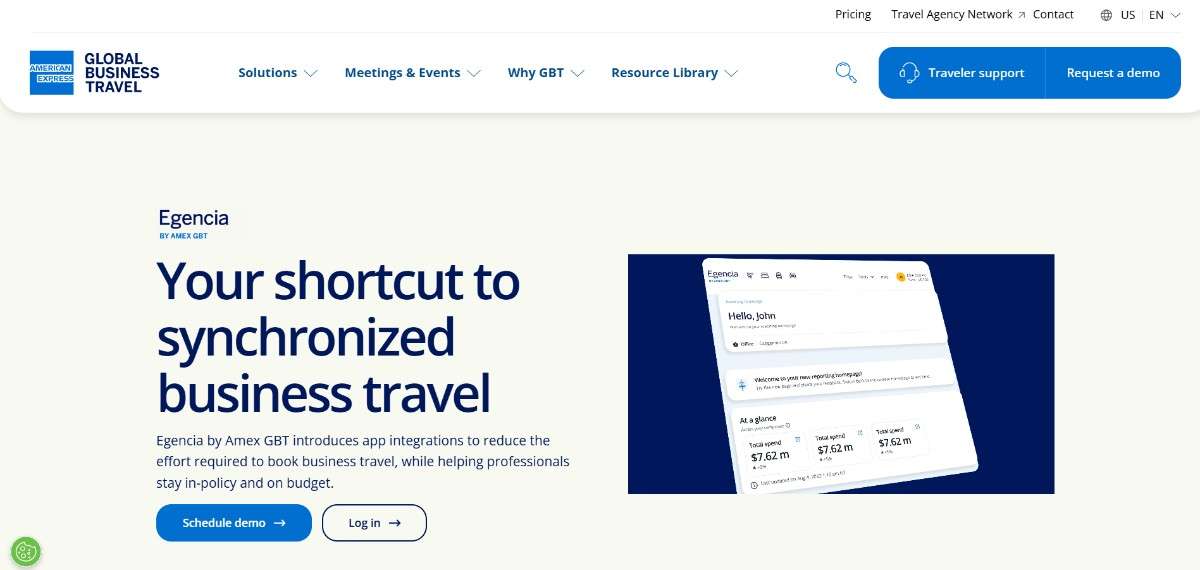
Best for: Global enterprises needing deep managed-travel inventory.
Egencia, now part of American Express Global Business Travel, is one of the strongest travel-management platforms for multinational enterprises with large travel budgets and complex global programs.
Its biggest advantage is inventory depth and managed-travel support. The tradeoff is that expense management still requires a separate platform.
Pricing: Custom enterprise pricing.
Pros:
- Deep global flight and hotel inventory
- Strong multinational support capabilities
- Enterprise-grade travel servicing
Cons:
- Requires a separate expense platform
- Long implementation cycles
- Mobile UX trails newer entrants
Migration from Concur: Moderate to complex. Enterprise deployments commonly exceed 60–90 days.
Concur vs Egencia
6. Ramp
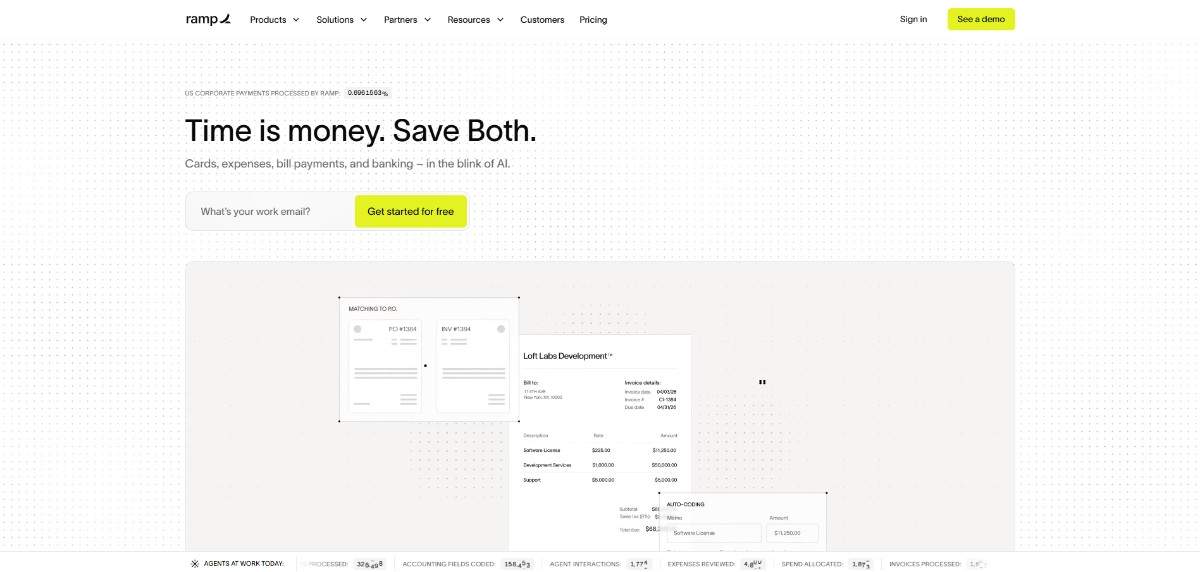
Best for: Finance-led companies prioritizing spend controls and corporate cards.
Ramp started as a corporate-card and spend-management platform before expanding into travel and bill pay. It remains strongest in finance automation, reconciliation, and card controls.
Travel exists through a Spotnana-powered layer, but the platform’s real strength is still finance operations rather than traveler experience.
Pricing: Free corporate cards; Ramp Plus starts around $15/user/month.
Pros:
- Industry-leading card controls
- Strong reconciliation and ERP automation
- Excellent SMB and mid-market finance tooling
Cons:
- Travel experience feels secondary
- No native email-to-expense workflow
- Best value depends heavily on card adoption
Migration from Concur: Moderate. Expense and card rollouts usually take 2–4 weeks.
G2 rating: 4.8 / 5 (2,000+ reviews as of May 2026).
Concur vs Ramp
7. Brex
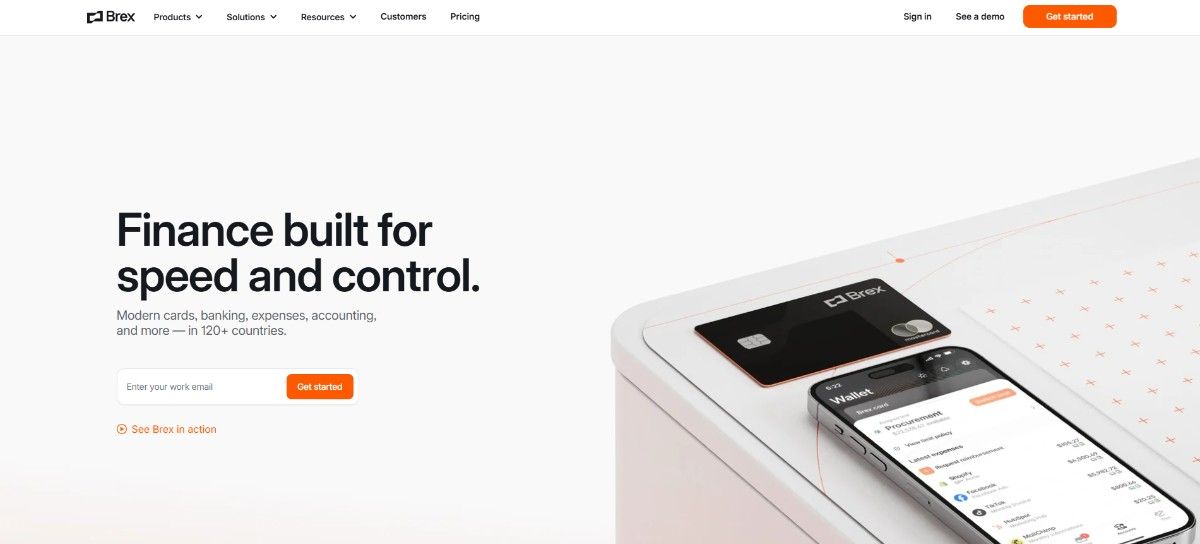
Best for: Funded startups and high-growth companies wanting banking, cards, and spend in one stack.
Brex combines banking, corporate cards, bill pay, and spend management into a single platform built primarily for venture-backed companies. Travel is powered by Spotnana and works well for straightforward booking use cases.
The biggest differentiator is the integrated financial stack. The tradeoff is that travel depth still trails dedicated T&E platforms like ITILITE or Navan.
Pricing: Free banking and cards; Premium starts at $12/user/month; Enterprise custom.
Pros:
- Strong banking + cards integration
- Local-currency cards and global support
- Fast onboarding for startups
Cons:
- Travel remains secondary to finance workflows
- Less mature for traditional enterprises
- Workflow depth trails dedicated T&E suites
Migration from Concur: Moderate. Startup deployments often go live within a few weeks.
G2 rating: 4.7 / 5 (1,500+ reviews as of May 2026).
Concur vs Brex
8. Emburse
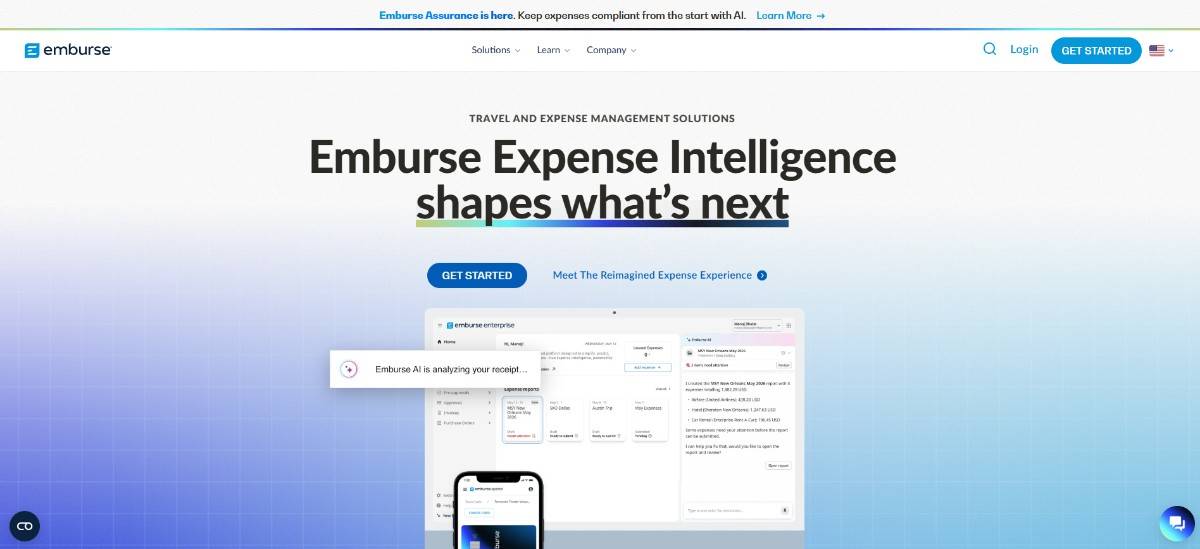
Best for: Enterprises with highly complex expense and compliance policies.
Emburse is one of the closest enterprise-style replacements for Concur, especially for organizations that care deeply about configurable policy logic and audit workflows.
Its biggest strength is policy depth. The tradeoff is platform fragmentation across products like Chrome River, Certify, and Emburse Cards.
Pricing: Tiered subscription; enterprise pricing custom.
Pros:
- Extremely granular policy controls
- Mature OCR and expense automation
- Strong enterprise audit workflows
Cons:
- Product ecosystem feels fragmented
- Travel capabilities lag travel-first platforms
- Integrations can become complex
Migration from Concur: Moderate to complex depending on policy configuration requirements.
G2 rating: 4.5 / 5 (2,300+ reviews as of May 2026).
Concur vs Emburse
9. Expensify
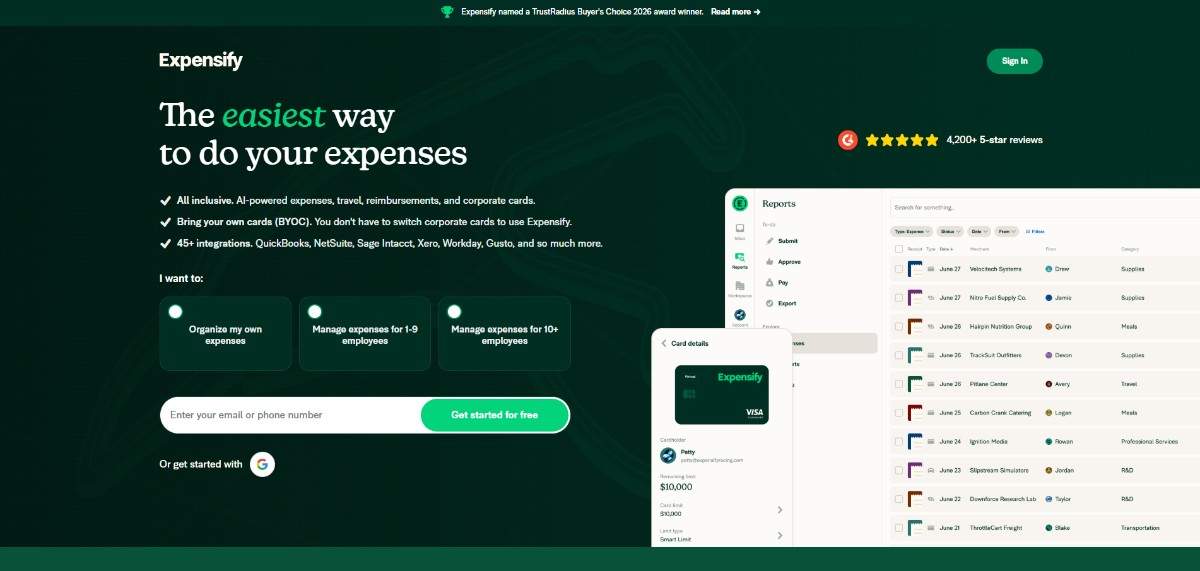
Best for: SMBs and freelancers needing simple expense reporting.
Expensify remains one of the most recognizable expense-only platforms in the market. The product focuses on receipt capture, reimbursement workflows, and lightweight approvals rather than enterprise travel management.
It works best for smaller companies that do not need integrated corporate travel booking.
Pricing: Starts around $5/user/month; higher tiers up to $36/user/month.
Pros:
- Easy to deploy and learn
- Strong receipt scanning
- Affordable entry pricing
Cons:
- No native travel management
- Limited enterprise workflow depth
- Pricing has increased over time
Migration from Concur: Easy. SMB deployments are typically live within days.
G2 rating: 4.5 / 5 with a large SMB user base.
Concur vs Expensify
10. Sage Expense Management (Formerly Fyle)
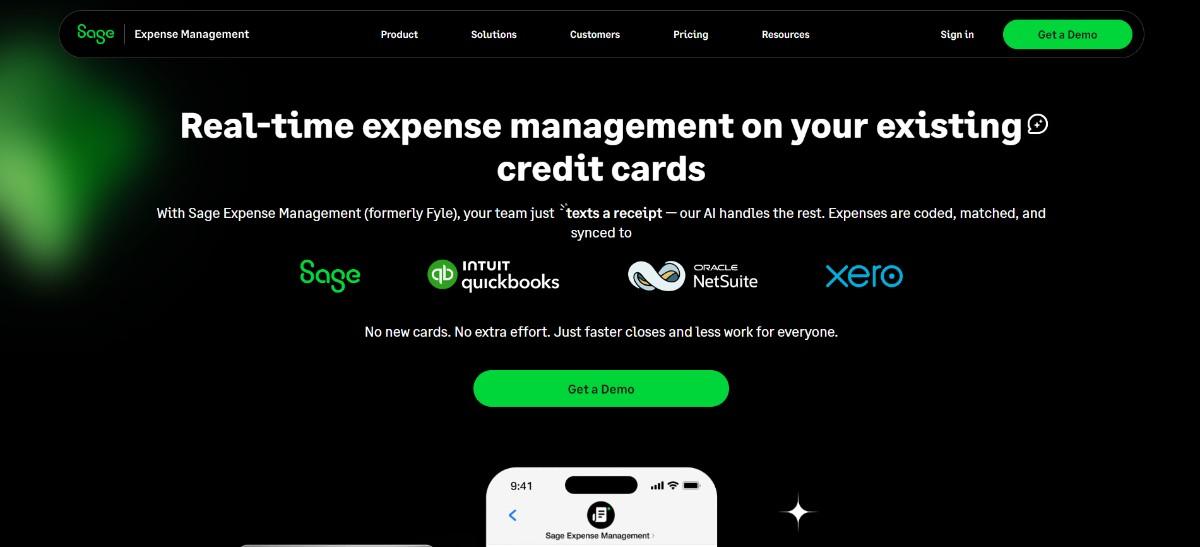
Best for: SMB finance teams running on QuickBooks, Xero, or NetSuite.
Sage Expense Management differentiates itself through real-time accounting sync and conversational receipt capture through tools employees already use, including Slack and email.
The platform is strongest as an expense-management layer rather than a travel platform.
Pricing: Starts at $11.99/user/month.
Pros:
- Real-time card-feed synchronization
- Deep accounting integrations
- Easy employee receipt submission
Cons:
- No native travel booking
- Reporting depth is limited
- Complex policy handling needs workarounds
Migration from Concur: Easy to moderate depending on accounting setup.
G2 rating: 4.6 / 5 with strong SMB finance reviews.
Concur vs Sage Expense Management
11. Zoho Expense
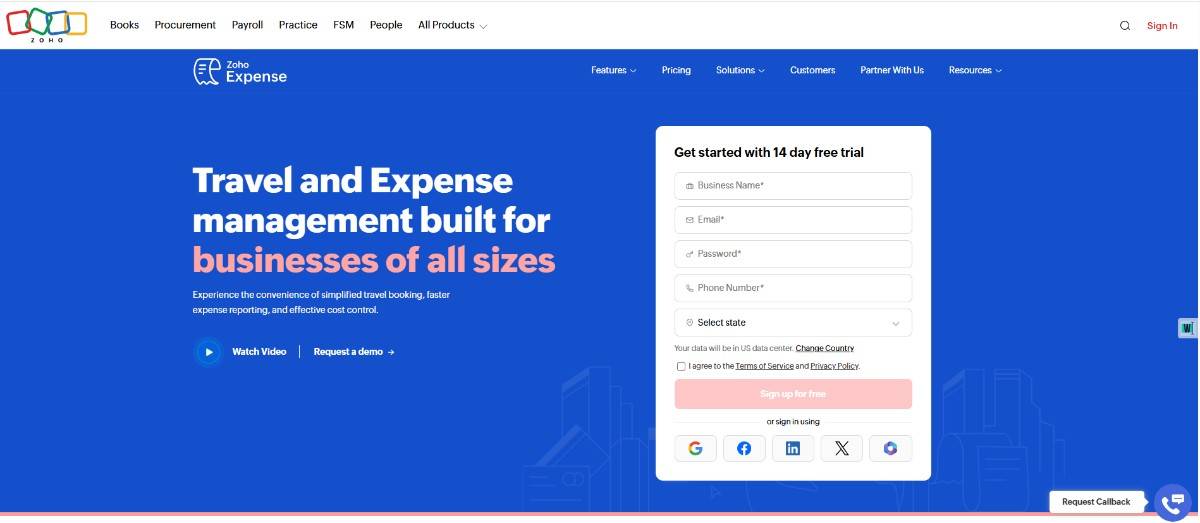
Best for: Companies already operating inside the Zoho ecosystem.
Zoho Expense is tightly integrated into Zoho One, making it attractive for businesses already standardized on Zoho Books, Zoho People, and related tools.
The platform delivers strong value for SMBs but lacks the premium travel and enterprise workflows found in larger T&E suites.
Pricing: Free for up to 3 users; paid tiers start at $5/user/month.
Pros:
- Aggressive SMB pricing
- Strong Zoho ecosystem integration
- Good international expense support
Cons:
- Travel booking relies on partners
- UX feels less modern than category leaders
- Limited fit outside the Zoho ecosystem
Migration from Concur: Easy for SMBs already using Zoho apps.
G2 rating: Strong SMB adoption with favorable pricing reviews.
Concur vs Zoho Expense
12. Coupa
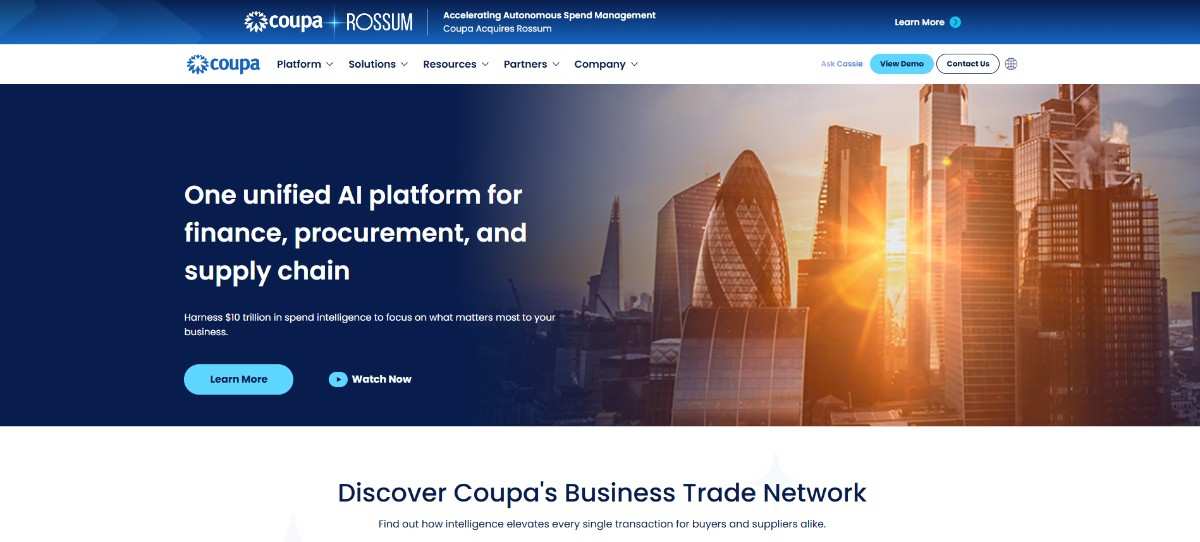
Best for: Procurement-led enterprises managing company-wide spend.
Coupa is fundamentally a procurement and spend-management platform rather than a travel-first T&E solution. It appears in Concur evaluations because large enterprises often bundle travel, procurement, AP, and supplier management together.
Its biggest strength is procurement depth. Its biggest weakness is travel functionality.
Pricing: Custom enterprise pricing.
Pros:
- Strong procurement and AP automation
- Enterprise-grade supplier intelligence
- Deep spend visibility across categories
Cons:
- No native travel inventory
- Long implementation timelines
- Travel and card functionality remain limited
Migration from Concur: Complex. Enterprise procurement deployments commonly take several months.
G2 rating: Enterprise leader in procurement and spend management.
Concur vs Coupa
How to choose a Concur alternative
Pick by dominant workflow first, integrations second, pricing third.
- If travel is your dominant workflow (>40% of T&E spend goes to travel), narrow to ITILITE, Navan, TravelPerk, Egencia, or Spotnana. Mid-market with mixed business and personal travel preferences favor ITILITE or Navan. Travel-only teams with frequent cancellations favor TravelPerk. Global enterprises favor Egencia. Embedded-travel-platform buyers favor Spotnana.
- If expense is your dominant workflow (you've already got travel sorted, you need to fix expense), narrow to Ramp, Brex, Emburse, Expensify, Fyle, or Zoho Expense. Card-led finance teams: Ramp or Brex. Complex policies in regulated industries: Emburse. SMB expense-only: Expensify or Fyle. Zoho ecosystem customers: Zoho Expense.
- If procurement is your dominant workflow, Coupa is the answer - paired with a T&E tool.
- Integrations matter second. Map your accounting system, ERP, HRIS, and corporate-card provider to each shortlist option. Ramp wins on NetSuite. Fyle wins on QuickBooks. Emburse and Concur both win on SAP. Open-API platforms with ATS integrations open the door for staffing and contractor-heavy workflows.
- Pricing comes third. The headline number rarely tells the full story. A "$5/user/month" tool with a $10K implementation fee is more expensive over 3 years than a $9/user/month tool with $0 implementation. Build a 3-year TCO model that includes implementation, support fees, and the cost of the integrations you'll need to bolt on.
If you want a head-to-head on the all-in-one option, the ITILITE vs Concur breakdown walks through pricing, support, and feature differences in detail.
FAQ
What is the best alternative to SAP Concur in 2026?
The best Concur alternative depends on your dominant workflow. For mid-market companies that want travel and expense on one platform, ITILITE and Navan lead. For card-led finance teams, Ramp and Brex. For expense-only on QuickBooks or Xero, Fyle. For enterprise procurement bundled with T&E, Coupa paired with a T&E tool.
Are there cheaper alternatives to SAP Concur?
Yes, most modern alternatives cost roughly half of Concur on a fully-loaded basis. Concur's per-transaction pricing plus $3K–$10K implementation fees push 3-year TCO higher than flat per-user platforms like Ramp ($15/user/month), ITILITE ($10/trip), or Expensify ($5/user/month).
What is the best Concur alternative for small teams?
For under 50 employees, Expensify, Fyle, and Zoho Expense are the strongest fits, all start under $12/user/month and self-serve onboard in under a week. If your small team also needs corporate cards, Brex or Ramp give you cards plus expense in one platform.
How does ITILITE compare to Concur and Navan?
ITILITE and Navan both compete with Concur as all-in-one T&E platforms. ITILITE charges $10 per trip plus expense per user; Navan charges roughly $15/user/month. Concur charges per expense report plus support fees. Navan leans travel-first; ITILITE balances travel, expense, and cards more evenly. Both beat Concur on UX.
Which platforms are replacing SAP Concur at enterprises?
At enterprise scale, the most common Concur replacements are Emburse (when policy granularity matters), Egencia plus a separate expense tool (when American Express GBT inventory is required), and Ramp or Coupa (when finance-led or procurement-led, respectively). Mid-market enterprises increasingly choose ITILITE for the all-in-one model.
Concur vs Chrome River - which is better?
Chrome River is now part of Emburse, which positions it differently than it did pre-acquisition. Chrome River's policy engine outperforms Concur on per-cost-center rule sets, and its OCR is sharper. Concur wins on ERP integration breadth (especially SAP). Most evaluations come down to whether you need Concur's SAP-native flow or Chrome River's policy depth.
Which Concur alternatives use AI effectively?
The strongest AI implementations in 2026 are ITILITE's Iris AI travel analyst with voice search, Ramp's AI-assisted bill pay, Brex's AI accounting automation, and Navan's automated receipt categorization. Concur added some AI features in 2024-2025 but the core workflows still lag the modern entrants.
Which alternatives offer the fastest customer support?
ITILITE publishes a 30-second support response target with free 24×7 live agents, fastest among the entries here. TravelPerk targets 7-second responses for travel issues. Concur's paid-support model and Navan's AI-only first layer are the slowest among comparable platforms.
If I switch from Concur to a modern alternative, how quickly can I get started?
Most modern T&E platforms onboard mid-market customers in 1–2 weeks at zero implementation fee, versus Concur's typical $3K–$10K implementation fee and 60-90 day timeline. The longest part of the switch is data migration from Concur, not stand-up time on the new platform.

Ardra is a Content Strategy Manager at ITILITE with 6+ years of experience in travel and SaaS content. She holds a Master’s degree in Political Science from Lady Shri Ram College for Women and transitioned from academic research and travel content into SaaS content strategy.
She previously worked with JustWravel, where she focused on travel storytelling and digital content. Today, she specializes in SEO and AEO-driven content strategies that help businesses simplify complex travel and expense workflows into search-optimized narratives.
When she’s not working, Ardra is usually reading or watching films.
Control Costs, streamline travel with 24/7 support.
A fully integrated corporate travel management software that dramatically reduces spends while improving user experience



.jpeg)

%20(1).png)
%20(1).png)





.jpeg)


.jpeg)
.jpeg)

.webp)

.jpeg)
.jpeg)

.webp)









.png)