15 Best Expense Management Software in 2026: Pricing, Pros, and Cons Compared



TLDR;
The 15 best expense management software in 2026 are ITILITE, Expensify, Ramp, Brex, SAP Concur, BILL Spend & Expense, Zoho Expense, Navan, Payhawk, Spendesk, Emburse, Coupa, Mesh Payments, Tipalti, and Fyle (Sage Expense).
- 30% of T&E buyers reevaluated their platform in 2025; 39% cited tech issues, 37% service quality
- The expense management software market reaches $8.48 billion in 2026, growing 10.10% annually to $13.82 billion by 2031
- Pick by use case: T+E in one product (ITILITE), SMB receipt capture (Expensify), finance-led card automation (Ramp, Brex), enterprise compliance (Concur, Coupa), AP-led SMB (BILL), Sage Intacct shops (Fyle), EU mid-market (Spendesk, Payhawk, Pleo), global mass payments (Tipalti), multi-entity global (Mesh Payments).
- The biggest 2026 shift: travel and expense are converging into one product, which is why several of the strongest picks no longer fit the "pure expense management" label cleanly.




Picking the best expense management software in 2026 is not the same problem it was three years ago. Ask why? The category has split in two.
Traditional expense-only tools that scan receipts and produce reports now compete with card-led platforms that capture spend at swipe and travel-led platforms that auto-create expenses at booking.
For finance leaders evaluating expense management software for the first time, the right pick depends on what surrounds the expense workflow. Travel-heavy teams want travel and expense in one product. Card-led teams want to spend captured points at the point of swipe. AP-led teams want budget enforcement before money leaves. Each of the 15 platforms in this guide owns a distinct corner of the category.
This 2026 buyer's guide compares the 15 best expense management software for finance teams across SMB, mid-market, and enterprise. Each entry includes a "Best for" use-case anchor, real pricing where published, honest pros and cons, integration depth, and G2 evidence so you can shortlist in under 15 minutes.
At-a-glance: the 15 best expense management software in 2026
*Pricing and ratings verified May 2026 (https://www.g2.com)
Looking for an expense management platform that combines travel, expense, and corporate cards under public per-trip pricing? Book a 30-minute ITILITE walkthrough
What is expense management software?
Expense management software is the category of products finance teams use to capture, approve, reconcile, and report on employee business expenses. The strongest 2026 products do more than capture receipts. They issue corporate cards, surface spend at the moment of swipe, enforce policy at the booking step, push general-ledger codes into the ERP automatically, and feed real-time analytics back to the controller's dashboard. The line between expense management and broader spend management has effectively dissolved.
Three product shapes now compete inside the category:
- Expense-first: (Expensify, Concur, Zoho Expense, Emburse). Started as receipt + report tools and added cards or travel later.
- Card-first: (Ramp, Brex, BILL Spend & Expense, Payhawk, Spendesk, Mesh Payments). Started as corporate card programs and added expense automation on top.
- Travel-and-Expense-first: (ITILITE, Navan). Built T+E together from the start; cards are the layer added on top.
Knowing which shape fits your team's primary workflow is the single best filter when comparing the 15 options below.
Why finance teams switch expense management software in 2026
Three forces are driving the 2026 wave of expense management software switching.
- The first is the T+E convergence: Skift's 2026 corporate travel research found that 80% of business travelers book or change travel from their phone at least sometimes, and 77% of travel managers want a single all-in-one mobile T&E experience. When travel and expense live in separate products, employees route around the system. The fastest-growing platforms in this guide all collapse the gap.
- The second is fraud and audit pressure: The Association of Certified Fraud Examiners 2024 Report to the Nations found that asset misappropriation, which includes expense fraud, accounts for 89% of occupational fraud cases with a median loss of $145,000 (). Finance leaders are switching to platforms that capture spend at swipe rather than waiting for an end-of-month reconciliation, because lag time is where fraud hides.
- The third is platform fatigue: Skift Research separately found that 71% of business travelers spend 30+ minutes filing an expense report, and 36% spend over an hour. When the platform itself becomes the friction point, switching makes sense.
These three forces shape which platforms are winning the 2026 evaluation cycle: ones that close the T+E gap, capture spend in real time, and reduce the time travelers actually spend filing.
How we evaluated the best expense management software for 2026
This list draws on five inputs:
- G2 and Capterra category data as of May 2026, including review counts, rating distributions, and category leader rankings
- Vendor product pages and pricing pages directly, with last-checked dates noted per entry
- 300+ customer-facing sales conversations from ITILITE's own buyer pipeline, where prospects discussed their current platforms and the gaps that drove them to evaluate alternatives
- Independent buyer surveys from GBTA, Skift, Forrester, and Mordor Intelligence (cited inline above)
- Direct product testing of the platforms ITILITE's product team has implementation access to
Disclosure: ITILITE publishes this article. ITILITE appears at #1 because the platform fits the most common 2026 evaluation pattern we see: mid-market teams wanting travel, expense, and corporate cards in a single product with published per-trip pricing. Where any other vendor outperforms ITILITE on a specific dimension, the entry below says so directly.
The 15 best expense management software for 2026
1. ITILITE
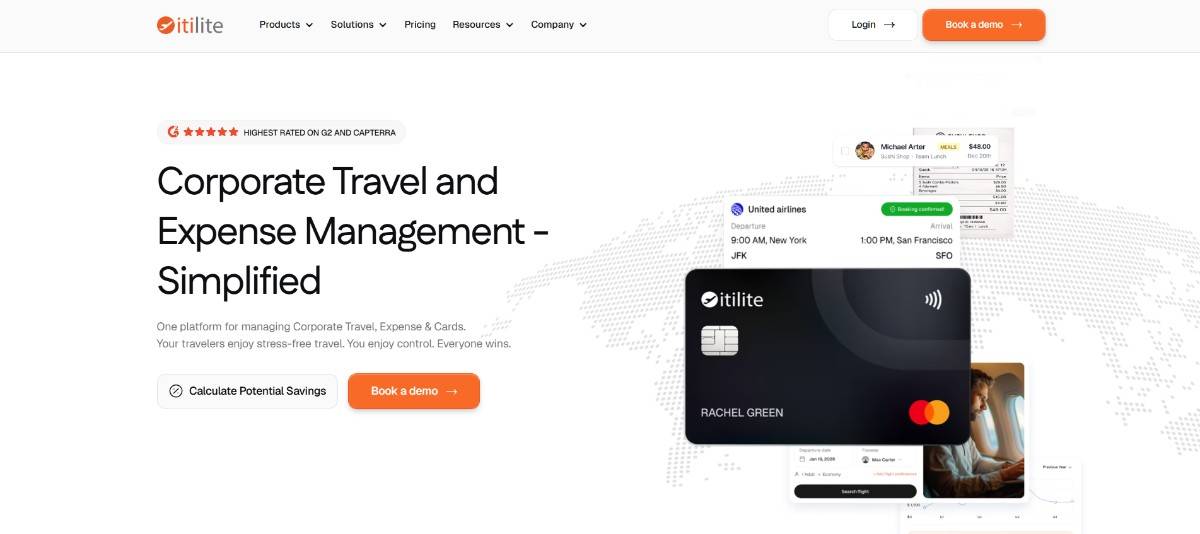
Best for company size: Mid-market companies (100–1,000 employees; 50–500 travelers) running real travel volume that want travel booking, expense management, and corporate cards in one platform with published per-trip pricing and 24/7 human support.
ITILITE is a T+E-native expense management software that pairs travel booking with expense capture and a corporate card program inside a single product. While most platforms in this guide started as either card programs or expense tools and added the other later, ITILITE waITILITE leads this group for mid-market US buyers wanting platform consolidations built T+E together from day one. That shows up in the integration between booking and reconciliation: when a flight is booked through ITILITE, the expense record is auto-created, GL-coded, and ready for finance to approve before the trip happens.
Key features:
- Travel booking across Sabre, Amadeus, Travelport, Booking.com, Priceline, and Agoda in one search
- In-app expense capture via camera OCR, voice memo, or email forwarding
- Corporate cards (virtual and physical) with up to 2.5% cashback
- Native NetSuite, Sage Intacct, QuickBooks Online, Workday integrations
- Custom policy engine: per-level, per-city, per-class spending rules
- 24/7 human support with a 30-second chat response SLA and 60-second phone SLA
Pricing
- $6 per active user per month on expense; $10 per trip on travel; billed annually.
- No setup, integration, or platform fees. Custom enterprise plans available.
Best for company size: Mid-market organizations (100–1,000 employees; 50–500 travelers).
G2 evidence: 4.5 of 5 across 700+ reviews as of October 2026.
2. Expensify
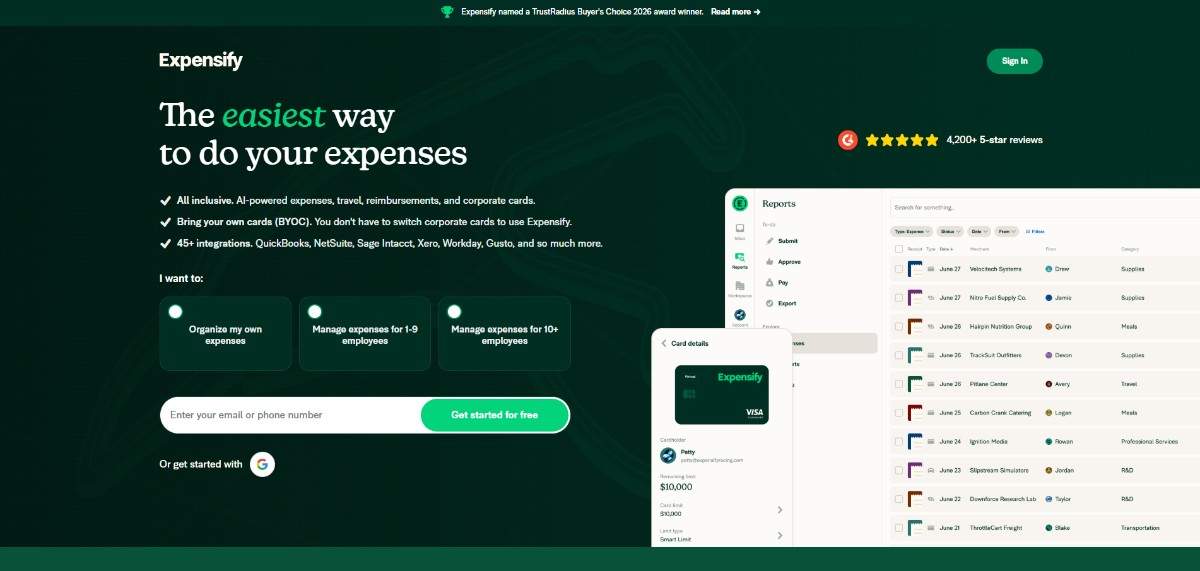
Best for: Solo founders, freelancers, and small teams whose primary need is fast receipt capture and reimbursements without the depth of mid-market T&E tooling.
Expensify popularized mobile receipt capture and remains the category default at the very small end of the market. The SmartScan workflow lets travelers snap a receipt and have date, vendor, amount, and category auto-extracted in seconds. Reimbursements process inside a few days through ACH. For a 5-to-30 person team with simple workflows, Expensify is hard to beat on time-to-value.
Key features:
- SmartScan OCR for receipt capture
- Auto-categorization with custom GL code mapping
- Per-diem and mileage tracking
- QuickBooks Online and Xero integrations (NetSuite reportedly weaker)
- Chat-centric interface in the 2024 redesign
Pricing:
- Collect plan opens at $5 per user per month; Control plan runs $9 per user per month. Free trial available.
Best for company size: Solo, SMB (1-50 employees)
G2 evidence: 4.5 of 5 with 5,000+ reviews as of May 2026.
3. Ramp
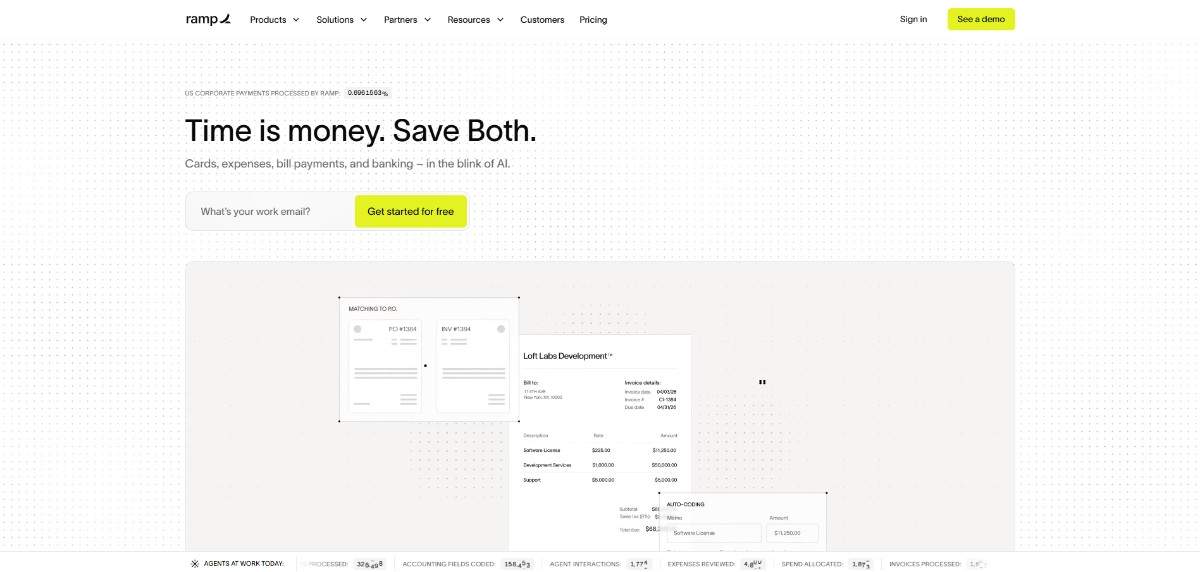
Best for: US-based finance teams whose primary workflow is corporate card spend, bill pay, and expense review, with travel as a secondary concern.
Ramp built the strongest spend-management platform in the US fintech category and added expense automation on top of its corporate card program. The card-to-receipt match is real-time: cards swipe and receipts attach inside the same product, eliminating the SmartScan-and-wait pattern that defines older expense tools. The free tier covers cards and core spend management, which makes Ramp the cheapest entry point on this list for teams that do not want to pay for expense software upfront.
Key features:
- Real-time card-to-receipt matching on every swipe
- Built-in price-intelligence flags for duplicate SaaS subscriptions
- SMS-based receipt capture for fast filing on the road
- Native NetSuite, QuickBooks, Sage Intacct, and Xero integrations
- Bill pay and reimbursements inside the same product
Pricing
- Ramp Plus is free. Ramp Plus Pro is $15 per user per month. Enterprise pricing custom.
Best for company size: Startups, SMB, lower-mid-market (10-500 employees)
G2 evidence: 4.8 of 5 with 2,800+ reviews as of May 2026.
For teams comparing Ramp specifically against other card-led platforms, our Ramp alternatives guide covers the broader space.
4. Brex
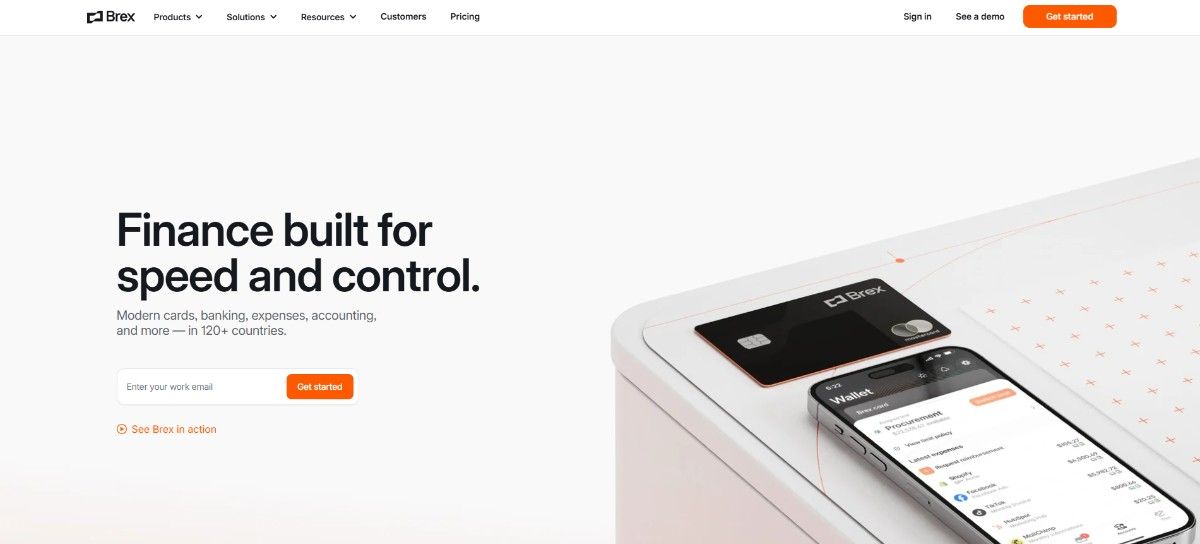
Best for: Funded startups and globally distributed companies that need corporate card issuance across multiple countries plus a real banking product, with expense as a secondary workflow.
Brex packages a banking account, corporate cards issued in 50+ countries, bill pay, and a travel module into one product. The differentiator against every other card-led platform on this list is global card issuance with local-currency billing in over 50 jurisdictions. For distributed teams that today juggle separate card programs per subsidiary, Brex collapses that complexity. The banking account holds idle balances and earns yield, which makes Brex closer to a financial operating system than a pure expense tool.
Key features:
- Card issuance in 50+ countries with local-currency billing and no FX margins
- Banking account with yield on idle funds
- AutoMap rules apply vendor logic and GL codes automatically
- Email-based receipt matching to transactions
- AI-powered expense classification
Pricing
- Brex Essentials is free. Brex Premium runs $12 per user per month. Enterprise pricing quoted.
Best for company size: Startups, SMB, lower-mid-market (5-500 employees)
G2 evidence: 4.7 of 5 with 1,500+ reviews as of May 2026.
5. SAP Concur

Best for: Multinational enterprises with multi-entity finance operations, complex cross-jurisdiction compliance requirements, and travel as a top-five spend line item.
SAP Concur is the incumbent enterprise expense management platform. Where Concur outperforms every other tool on this list is the depth of integration with SAP's broader ERP suite and the maturity of its global travel + expense + invoice modules. For organizations operating across multiple countries with statutory tax requirements per jurisdiction, no platform on this list matches Concur's compliance footprint.
Key features:
- Native two-way integration with SAP ERP family
- Multi-currency, multi-entity, multi-jurisdiction policy engine
- Global travel inventory and corporate travel program management
- Mobile receipt capture via the Concur Mobile app
- Invoice and AP modules available alongside expense
Pricing:
Quote-only. Total contract value varies with module mix, seat count, and SAP ERP relationship. Travel typically priced per trip with separate fees for support calls and add-on modules.
Best for company size: Enterprise (1,000+ employees, especially multi-entity multinationals)
G2 evidence: 4.0 of 5 with 6,500+ reviews as of May 2026.
6. BILL Spend & Expense
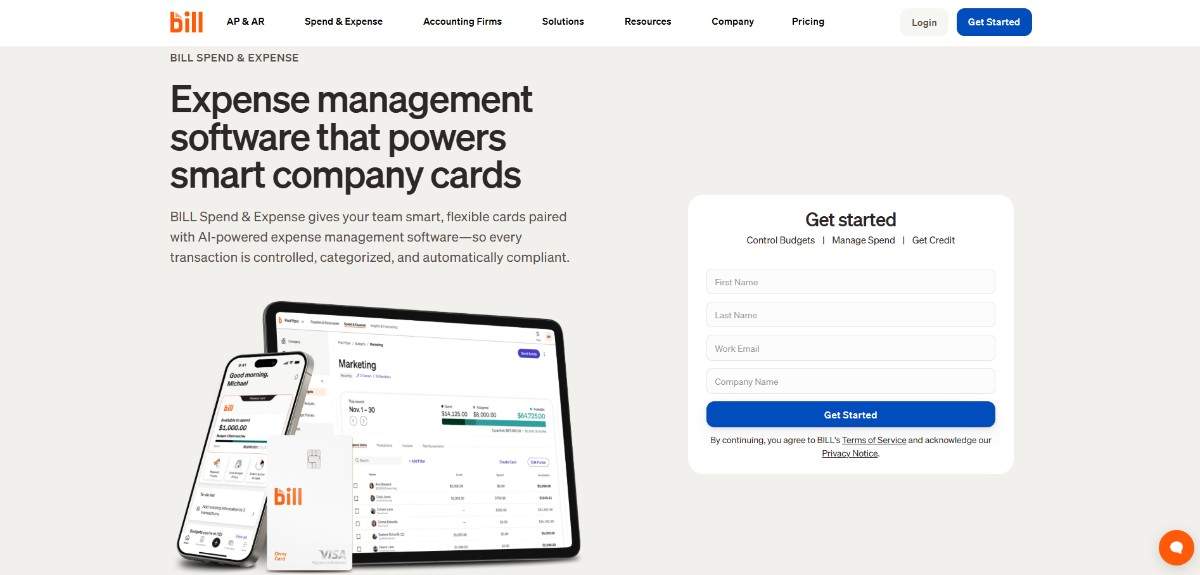
Best for: Small and mid-sized businesses where bill pay and AP are the dominant workflows, with corporate cards used as a budget-enforcement layer rather than a credit program.
BILL Spend & Expense (formerly Divvy) is the spend management product inside the BILL ecosystem, which also includes one of the largest AP automation footprints in North American SMB. The card model is prefunded: budget dollars are loaded onto the card before employees can spend, so once the budget hits zero the card declines. That is the inverse of every credit-based platform on this list and the cleanest budget enforcement available.
Key features:
- Prefunded card model with hard budget caps that decline at zero
- Free card-and-budget tier (BILL earns interchange instead of charging software fees)
- Tight integration with BILL's AP automation suite
- Unified login for AP, cards, and expense workflows
- QuickBooks, Xero, NetSuite, Sage Intacct integrations
Pricing:
Spend & Expense cards are free. AP automation is separately licensed starting around $79 per month for the Corporate package.
Best for company size: SMB (10-200 employees)
G2 evidence: 4.7 of 5 with 1,400+ reviews as of May 2026.
7. Zoho Expense
Best for: Cost-conscious SMBs already running inside the Zoho One ecosystem who want expense management at the lowest published per-user price.
Zoho Expense is the cheapest credible expense management software on this list. The Standard tier at $3 per user per month undercuts Expensify Collect by 40% and Brex Premium by 75%, and the free tier covers teams up to three users. For SMBs running Zoho Books for accounting, the native bi-directional sync is the clearest argument for picking Zoho over a more polished alternative. For teams outside the Zoho ecosystem, the value drops fast since other ERP integrations are less mature.
Key features:
- Receipt OCR with auto-extract across 30+ scan languages
- Mileage tracking via GPS or manual entry
- Per-diem rules per country
- Native bi-directional integration with Zoho Books
- Multi-currency support across Zoho's product suite
Pricing:
- Free for up to 3 users. Standard: $3 per user per month (annual) or $4 per user per month (monthly billing).
- Premium: $5 per user per month. Enterprise: $8 per user per month.
Best for company size: SMB (1-50 employees), especially Zoho One customers
G2 evidence: 4.5 of 5 with 1,300+ reviews as of May 2026.
8. Navan
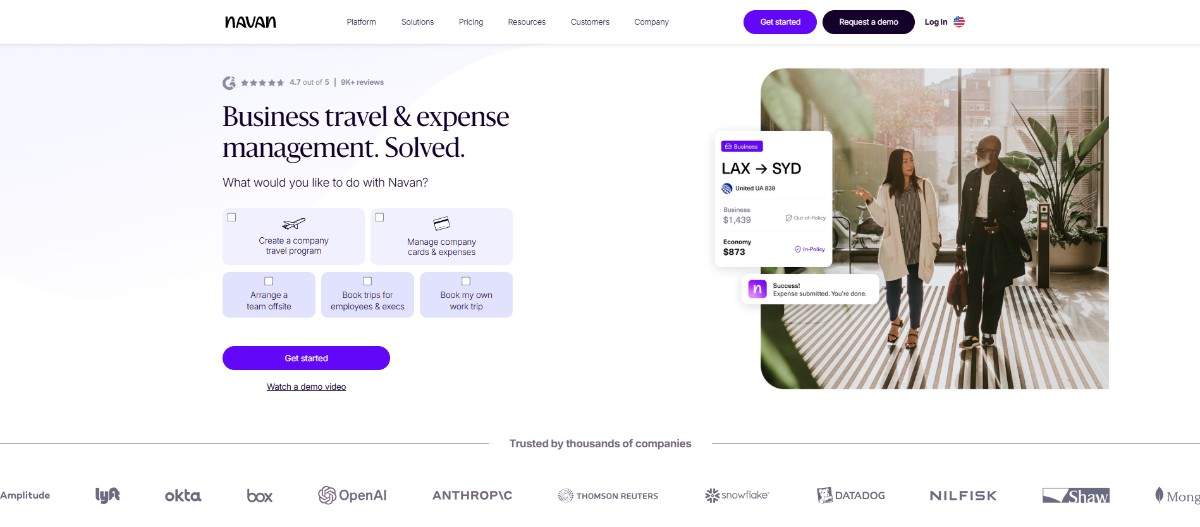
Best for: Travel-heavy mid-market and enterprise teams that want a polished mobile booking experience with auto-expense at booking and a corporate card layered on top.
Navan (formerly TripActions) is the second T+E-native option on this list alongside ITILITE. The platform owns the travel booking flow and auto-creates expenses the moment a trip is booked, which eliminates the after-the-fact report submission that defines older expense tools.
Key features:
- Full GDS travel inventory with consumer-grade mobile booking UX
- Auto-expense creation at booking time
- Navan card with gamified rewards for choosing lower-cost options
- Native iOS and Android with offline itinerary
- AI-powered expense triage and policy enforcement
Pricing:
- Travel is free at the entry tier. Expense starts at $15 per user per month. Enterprise pricing custom.
Best for company size: Mid-market (50-2,000 employees), enterprise
G2 evidence: 4.7 of 5 with 9,000+ reviews as of May 2026.
For teams comparing Navan specifically against other travel-led platforms, our Navan alternatives guide covers the comparison.
9. Payhawk
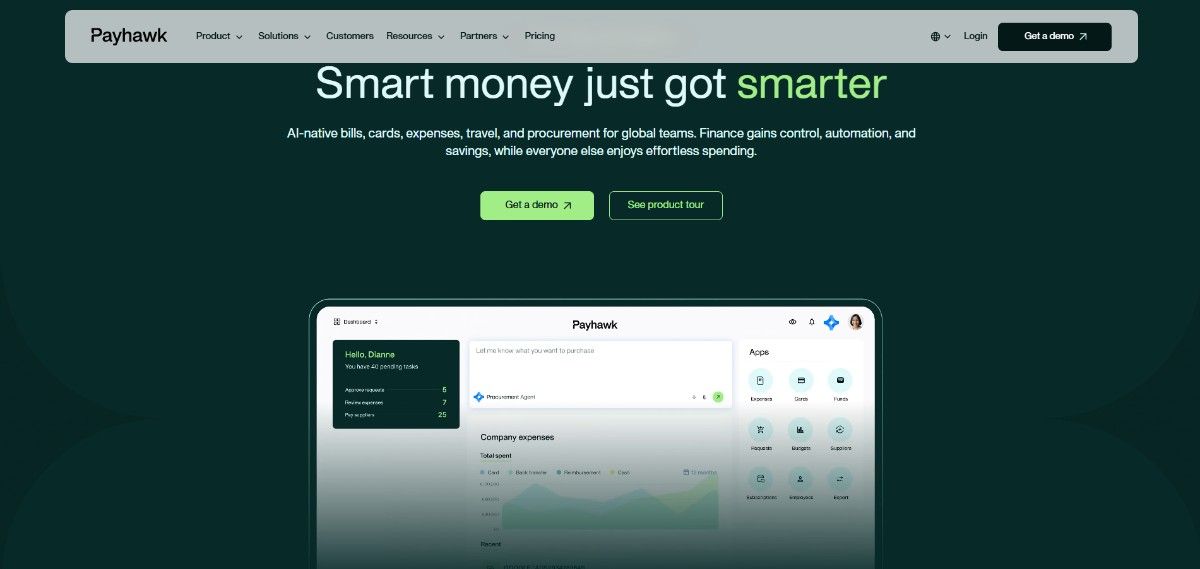
Best for: Mid-market multi-entity programs operating across Europe and the US that need card spend visibility consolidated across legal entities.
Payhawk is the rising European multi-entity spend platform. The product combines corporate cards, expense management, accounts payable, and procurement into one dashboard with a multi-entity hierarchy designed for groups operating subsidiaries across multiple countries. For mid-market companies with EU and US operations where consolidating card programs and expense reporting across entities matters, Payhawk fills a gap most US-anchored competitors do not address.
Key features:
- Corporate cards (physical and virtual) with multi-currency support
- Multi-entity hierarchy with consolidated reporting per parent and per subsidiary
- AP automation alongside expense workflows
- Procurement and PO management for the mid-market segment
- Native NetSuite, Xero, Sage, QuickBooks integrations
Pricing:
- Custom (quote-only). SMB plans typically run per-user per-month bands; enterprise contracts negotiated.
Best for company size: Mid-market (50-1,000 employees), especially EU-headquartered or US-EU dual operations
G2 evidence: 4.5 of 5 with 1,200+ reviews as of May 2026.
10. Spendesk
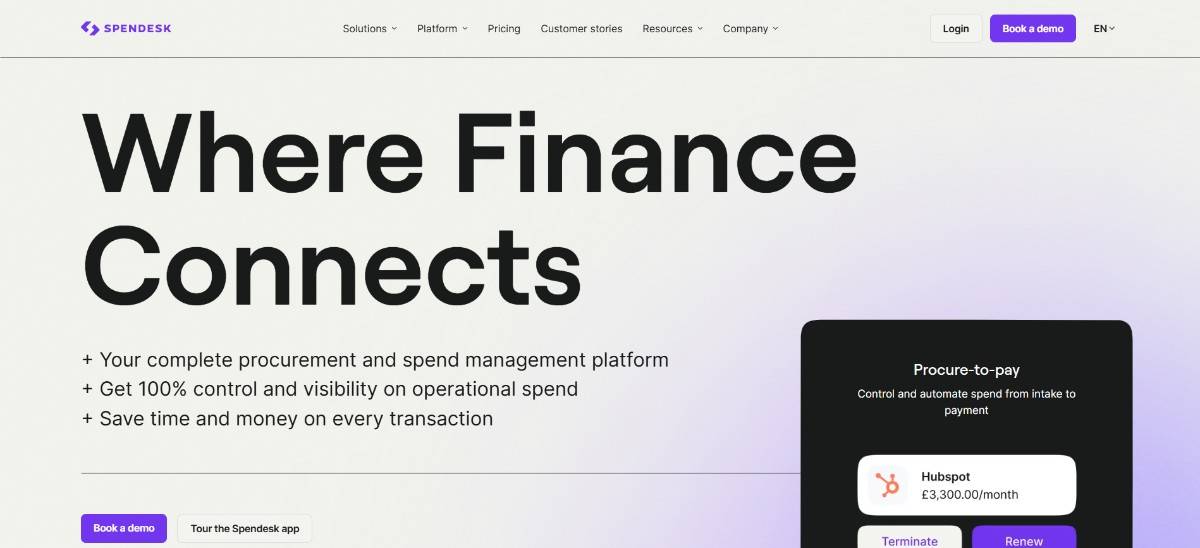
Best for: European mid-market teams that want spend management plus invoice management and bill pay tuned to EU tax rules and SEPA payment flows.
Spendesk is the strongest European spend management platform on this list. The product bundles cards, invoice management, expense, and pre-approval workflows into a single product designed around EU VAT, multi-entity setups, and SEPA payment flows. For US-only teams the case is weaker; for EU-headquartered teams Spendesk is the natural mid-market pick. Pre-approval workflows are deeper than most card-first competitors, which suits programs that need spend approved before money moves.
Key features:
- Pre-approval workflows that block spend before authorization
- Built-in invoice management alongside cards and expense
- Multi-entity support across EU jurisdictions
- SEPA payment processing for vendor and reimbursement payouts
- Native Xero, Sage, NetSuite, Datev integrations
Pricing:
- Custom (quote-only) across three plan tiers (Essentials, Scale, Premium).
Best for company size: Mid-market (50-500 employees), EU-headquartered
G2 evidence: 4.7 of 5 with 600+ reviews as of May 2026.
11. Emburse
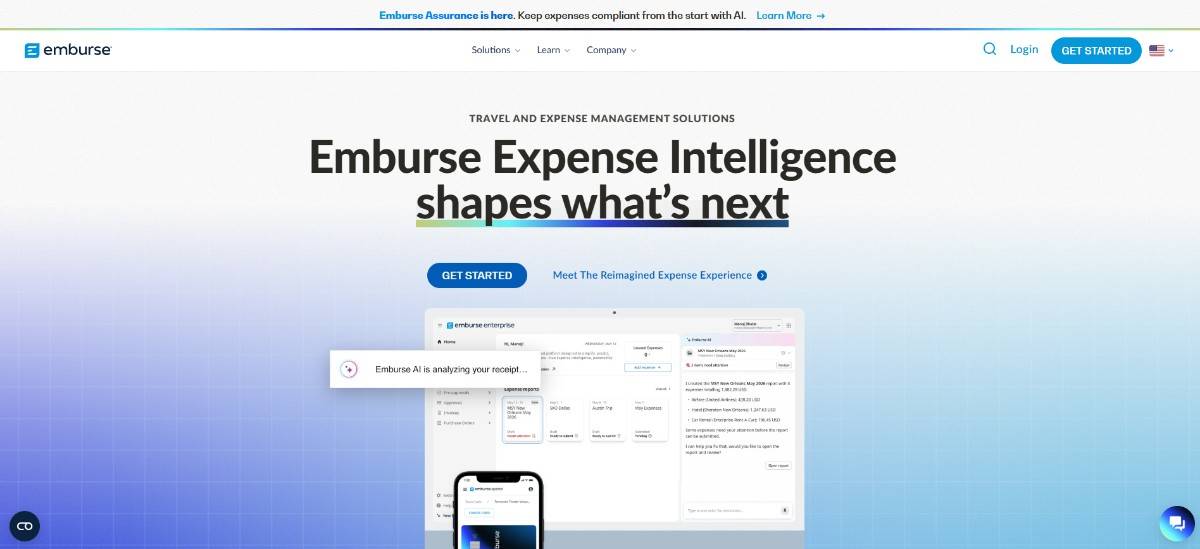
Best for: Mid-market and enterprise teams running Certify, Chrome River, Abacus, or Tallie that want to consolidate inside one vendor portfolio while preserving the existing data model.
Emburse is the parent brand that has consolidated several mid-market expense products under one roof: Certify, Chrome River, Abacus, Captio, and Tallie. The combined portfolio covers expense, corporate cards, and reimbursement use cases at every scale from small business to enterprise. For teams already on one of those products, the Emburse path preserves the existing data model while accessing newer modules across the portfolio.
Key features:
- Deep policy enforcement and audit controls with granular approval rules
- Multi-tier approval workflows beyond what SMB-tier platforms support
- Travel + expense available via the unified portfolio (2025 launch)
- Customer portal across Certify, Chrome River, Abacus, and Tallie
Pricing:
- Quote-only across the product portfolio. Certify entry-tier pricing lands around $8 per user per month for SMB plans.
Best for company size: Mid-market through enterprise (100-5,000 employees)
G2 evidence: Emburse Certify holds 4.5 of 5 with 1,300+ reviews as of May 2026.
12. Coupa
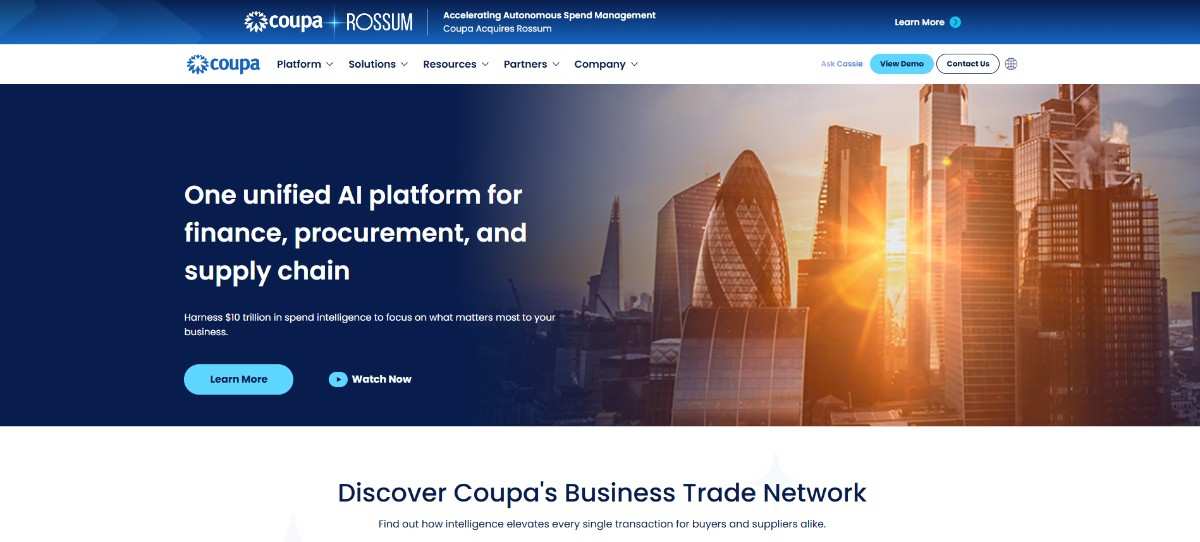
Best for: Large enterprises that want expense management linked upstream into procurement, with PO-driven spend control rather than post-spend receipt capture.
Coupa sits at the procurement end of the spend management category. Rather than scanning receipts after spend happens, Coupa controls spend before it happens via purchase orders, blocking unauthorized buying at the requisition layer. For organizations running formal procurement programs alongside corporate cards, Coupa is the gold standard. The community intelligence layer benchmarks transactions against thousands of enterprise customers to flag fraud and pricing anomalies.
Key features:
- Unified procurement, invoicing, expense, and travel inside one platform
- Pre-spend PO linkage prevents unauthorized purchases at the source
- Community Intelligence fraud detection benchmarking against thousands of customers
- Real-time spend analytics across the full lifecycle
- Strong contract management and supplier onboarding
Pricing:
- Quote-only. Implementation typically requires a Coupa partner.
Best for company size: Enterprise (1,000+ employees, especially with formal procurement organizations)
G2 evidence: 4.2 of 5 with 600+ reviews as of May 2026.
13. Mesh Payments
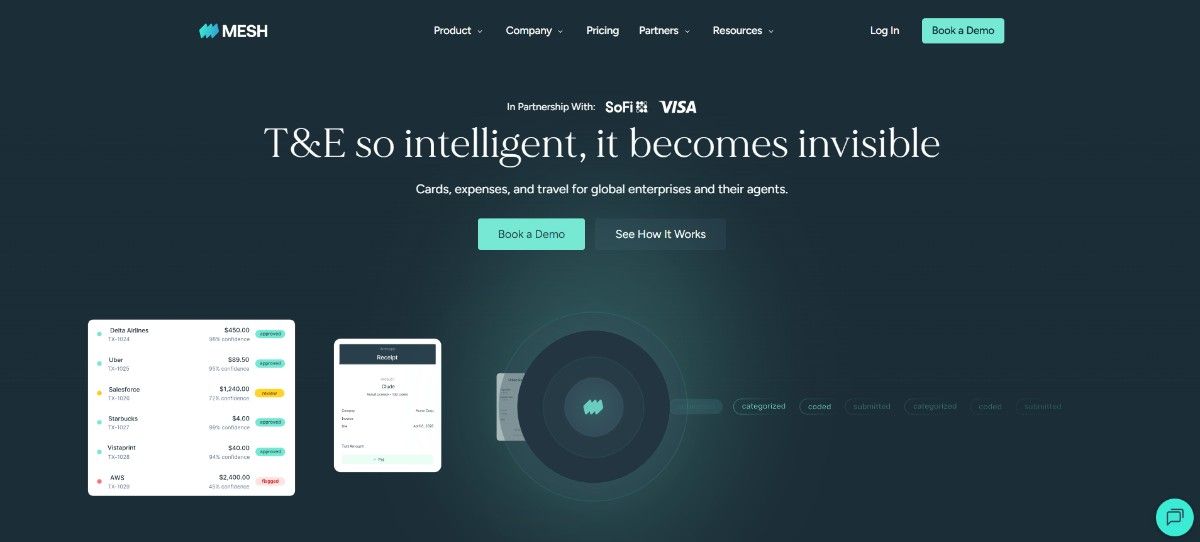
Best for: Globally distributed mid-market teams that want multi-entity card issuance and spend control on mobile, with travel delivered through a Spotnana integration.
Mesh Payments takes the opposite approach to Brex and Ramp on cards: instead of pushing buyers onto a single Mesh-issued card program, Mesh sits on top of existing card issuers and adds a spend control layer plus travel via Spotnana. For globally distributed teams that want multi-entity card visibility without migrating banking relationships, Mesh is the cleanest option on this list. The platform is also card-issuer-agnostic, which suits programs that want to preserve existing Amex, Chase, or other issuer relationships.
Key features:
- Card-issuer-agnostic spend control across existing Visa, Mastercard, Amex
- Multi-entity card issuance across multiple countries
- Travel via Spotnana integration with full GDS coverage
- Real-time spend visibility per entity, per cost center, per traveler
- Virtual and physical card issuance via Mesh's own card program (optional)
Pricing:
- Custom (quote-only).
- SMB plans typically track per-user-per-month bands.
Best for company size: Mid-market (50-1,000 employees), especially globally distributed
G2 evidence: 4.6 of 5 with 1,000+ reviews as of May 2026.
14. Tipalti
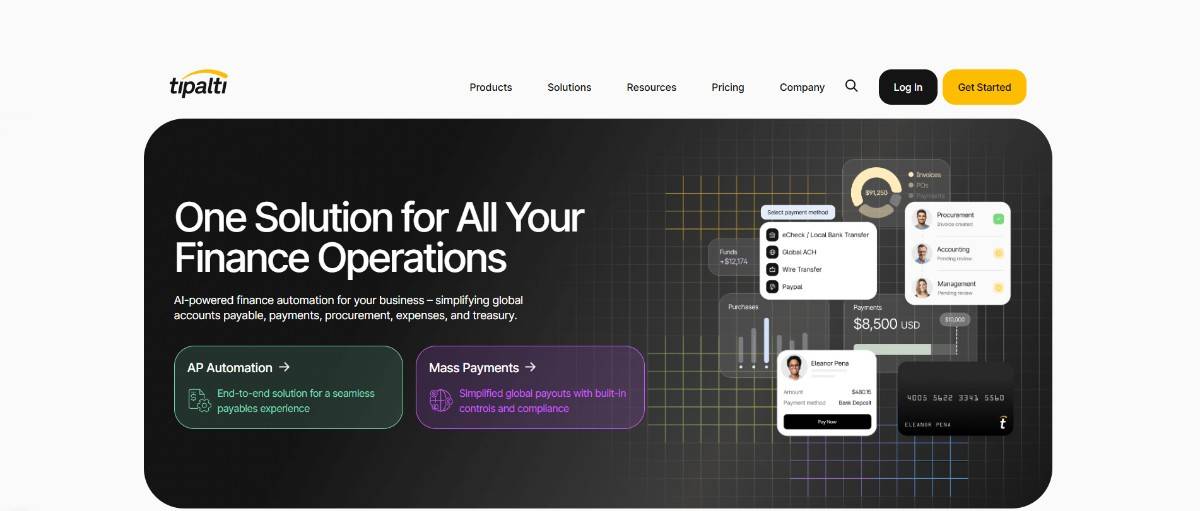
Best for: Companies running mass freelancer, contractor, or affiliate payments globally who want expense reimbursement folded into the same AP workflow.
Tipalti is best known for AP automation, particularly for organizations paying thousands of freelancers, affiliates, or contractors globally. The Tipalti Expenses module has grown into a serious option for teams already running Tipalti for payouts who want a single AP-side workflow that handles expense reimbursements alongside vendor payments. The global payment footprint is unmatched: 196 countries, 120 currencies, multiple payout methods including wire, PayPal, prepaid card, and local bank transfer.
Key features:
- Global mass payments across 196 countries, 120 currencies
- Multiple payout methods (wire, PayPal, prepaid card, local bank)
- Supplier portal for self-service tax form and bank detail updates
- Tax form enforcement (W-9, W-8) before payout
- Unified AP workflow treating expense reimbursements as vendor payments
Pricing:
- Custom (quote-only).
- Typical structure: monthly platform fee plus per-transaction charges.
Best for company size: Mid-market through enterprise (100+ employees with contractor-heavy operations)
G2 evidence: 4.5 of 5 with 1,000+ reviews as of May 2026.
15. Sage Expense
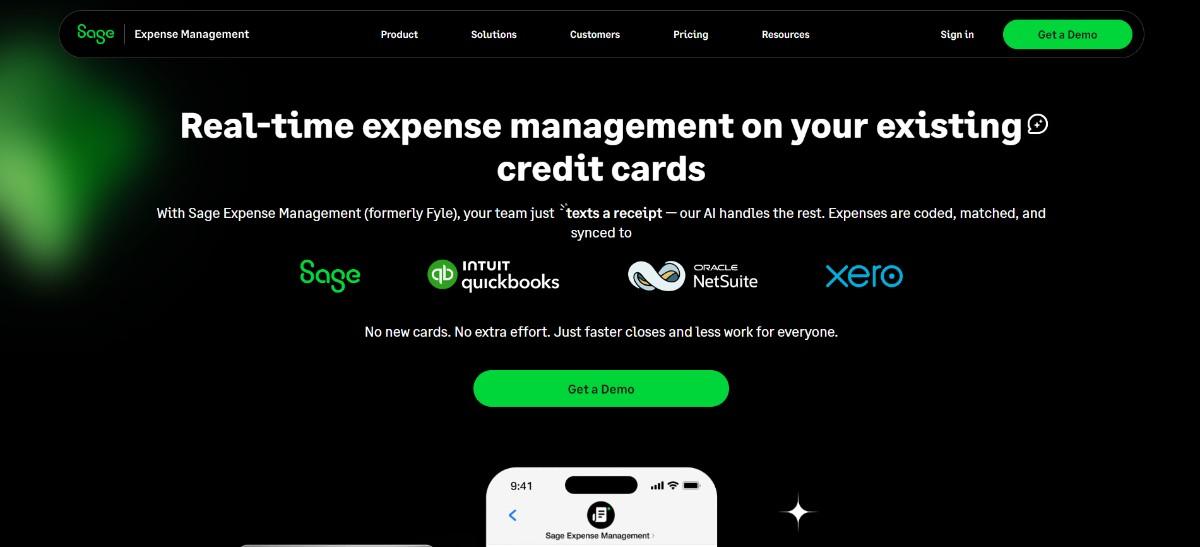
Best for: Finance teams already running Sage Intacct who want real-time card feeds across existing Visa, Mastercard, and Amex without forcing a corporate card migration.
Fyle (rebranded in some markets as Sage Expense after a partnership with Sage) solves the one problem most card-led platforms ignore: it lets you keep your existing corporate cards. The product connects directly to Visa, Mastercard, Amex, and most US issuer banks for real-time transaction feeds. For Sage Intacct customers whose primary pain is the receipt-to-report cycle delay, Fyle closes that gap without requiring a switch to a new card program.
Key features:
- Real-time card feeds across most major US issuer banks
- Bi-directional Sage Intacct integration with 24-hour automatic sync
- Text-based expense submission (photo via SMS)
- Multi-dimensional accounting for project-based rebilling
- Native QuickBooks, Xero, NetSuite, Sage Intacct integrations
Pricing:
Standard plan starts at $7 per user per month. Business plan: $11.99 per user per month. Enterprise: custom.
Best for company size: SMB through mid-market (10-500 employees), especially Sage Intacct customers
G2 evidence: 4.6 of 5 with 1,400+ reviews as of May 2026.
FAQ
What is the best expense management software for 2026?
The best expense management software depends on the use case that drives the evaluation. ITILITE leads for mid-market teams wanting travel, expense, and corporate cards in one product with published pricing. Ramp leads for finance-led card automation. SAP Concur remains the enterprise default for global multi-entity compliance. Expensify and Zoho Expense lead for SMB receipt capture at the lowest cost.
Is there a free expense management software?
Yes, several. Ramp Plus is free for cards and core spend management. Brex Essentials is free at the entry tier. BILL Spend & Expense is free on the card side (interchange-funded). Zoho Expense is free for up to 3 users. None of these match a paid mid-market T&E platform for full feature surface, but each is a viable starting point at zero cost.
How does AI improve expense reporting in 2026?
The strongest 2026 platforms use AI in three places: receipt OCR (Expensify SmartScan, Zoho auto-extract, ITILITE OCR), card-to-receipt matching at swipe (Ramp, Brex, Mesh Payments), and policy enforcement at booking (ITILITE Mastermind, Navan policy engine). AI Concierge-style support has drawn mixed reviews; finance teams typically prefer human support during disruptions.
Does expense management software integrate with QuickBooks and NetSuite?
Yes, all 15 platforms in this guide integrate with at least QuickBooks. NetSuite integration depth varies, ITILITE, Ramp, Brex, and SAP Concur have the strongest NetSuite stories. Expensify's NetSuite integration has been reported to produce sync errors, including the documented ExpensiError NS0023 custom-field mapping failure. Sage Intacct integration is strongest with Fyle and ITILITE.
What is the difference between expense management software and spend management software?
Expense management traditionally focused on receipt capture and reimbursement after spend happens. Spend management is broader: it includes corporate cards, AP automation, procurement, and pre-spend approval. In 2026, the line between the two has effectively dissolved, most of the 15 platforms on this list now span both. The strongest 2026 picks combine real-time card spend capture with traditional expense reporting in one product.
Is it safe to link corporate bank accounts to expense management software?
Yes, when the platform meets enterprise security standards. Look for SOC 2 Type II certification, GDPR compliance, ISO 27001 certification, and PCI DSS Level 1 for any platform issuing cards. All 15 platforms in this guide meet at least SOC 2 Type II as of May 2026. Sensitive banking data is typically tokenized rather than stored in plaintext.
How long does it take to implement expense management software?
Implementation varies dramatically by platform. Same-day setups are possible for Zoho Expense and Expensify. ITILITE goes live in 2-3 days for standard deployments, extending to 2 weeks for complex ERP integrations. Ramp, Brex, BILL, and Fyle typically take 1-3 weeks. Navan and Payhawk run 3-5 weeks. Emburse, Mesh Payments, and Tipalti run 4-6 weeks. SAP Concur and Coupa typically require 4-9 months and a partner consultant.
Which expense management software has the best customer support?
ITILITE is the only platform on this list that runs 24/7 human support with a 30-second chat response SLA and a 60-second phone SLA. Most competitors (Expensify Concierge, Navan AI, Ramp chat-first) lead with AI triage and route to humans on escalation, which is faster for routine queries but slower during travel disruptions when a card declines or a flight cancels.

Ardra is a Content Strategy Manager at ITILITE with 6+ years of experience in travel and SaaS content. She holds a Master’s degree in Political Science from Lady Shri Ram College for Women and transitioned from academic research and travel content into SaaS content strategy.
She previously worked with JustWravel, where she focused on travel storytelling and digital content. Today, she specializes in SEO and AEO-driven content strategies that help businesses simplify complex travel and expense workflows into search-optimized narratives.
When she’s not working, Ardra is usually reading or watching films.
Control Costs, streamline travel with 24/7 support.
A fully integrated corporate travel management software that dramatically reduces spends while improving user experience

.avif)
.avif)