

Travel & Expense Policy: 7 Step Guide with Template (2026)
.webp)


TLDR;
- Review the policy at least annually, and whenever GSA per diem rates, tax regulations, company structure, or travel patterns change.
- A travel and expense policy defines what employees can spend on business travel, how they book it, and how they get reimbursed. It applies to every person spending company money, employees, contractors, and executives.
- In an internal analysis of 3,323 customer conversations across finance, HR, and operations leaders, 85% referenced T&E policy enforcement, compliance, or out-of-policy booking as an active pain point. Enforcement, not policy design, is the real problem.
- A working policy has seven core components: eligibility, booking rules, spending caps with per diem, tiered approval workflow, documentation standards, reimbursement timelines, and violation consequences.
- The most common 2026 failure mode: managers rubber-stamping out-of-policy spend to avoid conflict. Policies only work when enforcement is embedded in the booking flow, not reviewed after the trip.


What is a travel and expense policy?
A travel and expense policy (T&E policy) is a document that defines which business travel costs your company will cover, how employees must book trips, and how they get reimbursed. It applies to every person spending company money on work-related travel - employees, contractors, and executives alike.
A good T&E policy does three things at once. It tells travelers what they can book before they book it. It gives finance and approvers a consistent rulebook when expenses land for review. And it gives leadership visibility into where company money is going without chasing spreadsheets after the fact.
The term “T&E” is used interchangeably with “travel and expense,” “travel and entertainment,” and “travel expense” policy. Most finance teams treat them as the same thing, though “travel and entertainment” sometimes includes client meals and gifts that a stricter travel policy would exclude.
Why every business needs a T&E policy in 2026
Without a T&E policy, companies typically overspend on travel by 20–30% compared to companies with clear, enforced rules. This is not because of fraud, but because of inconsistent decisions made individually by dozens of travelers.
Business travel is back to record highs: global business travel spending hit $1.5 trillion in 2024, with U.S. business travel reaching $472 billion, according to the World Travel & Tourism Council (WTTC, 2024).
That spend is large enough that small policy gaps compound into meaningful leakage.
Three things changed about T&E policy between 2019 and 2026:
- Hybrid and remote teams now travel to in-person offsites rather than commuting. Policies written for “everyone flies to HQ” patterns no longer match reality.
- Blended travel (bleisure) is mainstream according to WTTC; travelers routinely tack personal days onto business trips. Your policy needs explicit rules on what the company pays for versus what the employee absorbs.
- Policy enforcement has moved from post-trip audit to pre-trip booking controls. The old pattern: submit expenses, hope finance catches violations, no longer scales.
Manual expense processing now costs $58 per report with a 19% error rate, according to GBTA Foundation benchmarks referenced by the American Express Business Insights team.
A clear policy also protects the company legally. The IRS requires an “accountable plan” for reimbursements to avoid them being taxed as wages (more on that below). Without written policy, your reimbursements may be miscategorized.
What expenses does a T&E policy cover?
A T&E policy covers any reasonable cost directly related to conducting business outside the office, plus a set of explicit exclusions the company does not reimburse. Making both lists explicit is what turns a vague expectation into an enforceable rule.
Your policy should say what happens with borderline cases: a traveler who upgrades at the counter, a client dinner that runs over the cap, a canceled trip where flights are non-refundable. Silent policies get interpreted differently by every approver, and that’s where disputes and leakage start.
What are the essential components of a T&E policy?
A complete T&E policy has seven components. Missing any one of them creates a predictable failure mode down the line.
1. Policy eligibility and scope
State who the policy applies to: full-time employees, contractors, interns, executives. State what counts as business travel: client meetings, conferences, training, site visits, team offsites. Call out any exceptions (board members, partner-track consultants) explicitly.
2. Booking guidelines
Specify approved booking channels, advance booking windows (typically 14 days for domestic, 21+ for international), preferred airlines and hotels (if negotiated rates exist), and permissible fare classes. Vague rules here cause the most rebookings and ad-hoc approvals.
3. Per diem rates and spending caps
Set daily limits: by city or region, for meals, lodging, and incidentals. Many U.S. companies benchmark against GSA per diem rates (General Services Administration); global companies use country- or city-specific tiers. Flag in advance: per diems change annually.
4. Approval workflows
Define who approves what, with threshold-based routing: - Expenses under $X: auto-approved if within policy - Expenses X–Y: direct manager approval - Expenses above $Y: escalate to finance director or VP - Out-of-policy bookings: require written justification routed to a “super approver”
Finance leaders consistently flag the absence of threshold routing as a top pain.
One finance director in our analysis described the current state bluntly: “Cannot automatically route high-value reports to director/VP level; everything goes to manager.”
The result is managers approving expenses far above their authority because the system gives them no other option.
For a deeper walkthrough of what an end-to-end expense approval workflow looks like, see our detailed guide
5. Expense reporting and documentation
Spell out: receipt requirements (usually required above $25–$75 per the IRS Publication 463 threshold), expense report submission cadence (weekly or within 30 days of trip end), and which expense categories require additional context.
6. Reimbursement process and cycle
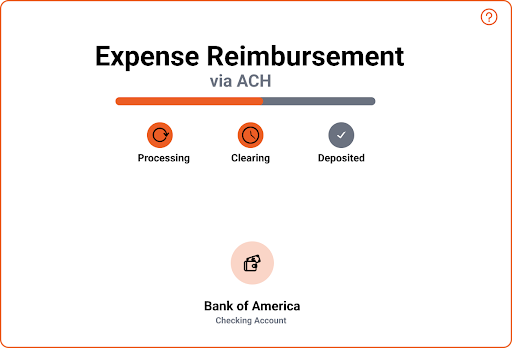
Define the reimbursement cycle in days, not weeks. A 21-day reimbursement cycle, still the modal benchmark we see at companies using legacy processes, forces employees to float business expenses on personal credit cards for weeks. Leading programs now target a 7-day cycle with direct deposit.
Our guide on how to simplify the expense reimbursement process covers the specific automations that cut cycle time in half
7. Non-compliance consequences and exception handling
State the policy on violations: what happens on first offense (warning), repeat offense (line-item rejection), and deliberate abuse (HR escalation). And have an explicit exception process for the legitimate cases, last-minute customer visits, stranded travelers, medical emergencies, that genuinely fall outside policy.
How to create a travel and expense policy in 7 steps
A travel and expense policy should reduce confusion, not create more of it. The best policies are clear about what employees can book, what needs approval, how reimbursements work, and who is responsible at each stage. Without structure, companies usually end up dealing with policy exceptions, delayed approvals, reimbursement disputes, and inconsistent spending. The steps below walk through how to build a practical T&E policy that employees can follow and finance teams can realistically manage.
Step 1. Audit your current travel spend and pain points
Pull six months of travel and expense data. Segment by category, department, and traveler. Identify the top five categories driving spend and the top five categories driving exception approvals. Talk to finance approvers: where do they waste the most time? Where do disputes arise?
Step 2. Align stakeholders before you write
Involve finance, HR, legal, and a representative from each frequent-travel department before drafting. Policies written in isolation by finance get pushback at rollout.
One oil & energy HR lead in our data put it directly: “folks push back…they just think this is very restrictive…it just slows down the adoption.”
Step 3. Define coverage and exclusions
Use the table format in the “What expenses does a T&E policy cover” section above. Be explicit. Every exclusion you skip becomes an argument later.
Step 4. Set spending caps and per diem tiers
Choose one of three approaches:
- Flat per diem (simplest; loses nuance): one rate for everyone, everywhere.
- GSA-based (most common in the U.S.): location-specific rates updated annually.
- Tiered custom (best for multi-region teams): different caps by city tier or country, with separate caps for airport transfers and incidentals.
International teams should expect per-diem rates to differ significantly by country.
One tech-company travel manager in our analysis called out the spread: “different per diem limits by country/region, $120/day Poland vs $80/day Colombia; US government standards by state.”
Manual upkeep on dozens of regional rates is a tax on finance admin; budget for it.
Step 5. Design the approval and reimbursement workflow
Map every request type to an approver and a decision time. Document which expense types need pre-trip approval; threshold-based routing rules (see component #4 above); how out-of-policy bookings get justified and routed; reimbursement SLA (target 7 days)
Step 6. Write in plain language and publish somewhere searchable
If employees need a legal dictionary, they won’t follow the policy. Write short sentences. Use real examples. Publish it in the same place employees already look for HR and finance answers. Static PDFs in a shared drive get outdated and forgotten; a living document in a wiki or your travel platform gets used.
Step 7. Roll it out, train, monitor, and revise
Announce the policy before it takes effect. Run a 30-minute training for frequent travelers and approvers. Track compliance metrics from month one: out-of-policy booking rate, average reimbursement cycle time, exception request volume. Revise annually, minimum, and any time GSA rates, tax rules, or company structure change significantly.
Download this travel and expense policy template that you can adapt
Having worked with 500+ global companies: from 50-person teams to enterprises with 10,000+ employees, we've seen firsthand what makes a travel and expense policy work. Based on how companies actually use ITILITE's policy and approvals features, we've pulled together the best practices across industries and company sizes into one free, ready-to-use template.
The template includes:
- Approval authority matrix (by role and spend level)
- Air travel rules: cabin class, advance booking windows, and fee guidelines
- Ground transportation: rental car, rideshare, and personal mileage reimbursement
- Hotel booking limits and standards by seniority
- Meal per diems and business entertainment rules
- Expense reporting requirements and deadlines
- A full list of reimbursable and non-reimbursable expenses
All fields are highlighted so you know exactly what to customize for your company. Download it in Word or Google Docs, fill in your details, and it's ready to share with your team.
Download the travel and expense policy template


How to enforce your T&E policy and drive compliance
Writing the policy is the easy part. Enforcement is where most programs fail.
In our internal analysis of 3,323 customer conversations, 85% referenced policy enforcement, compliance, or out-of-policy booking as an active pain point, far more than referenced policy drafting or per-diem rate-setting.
For a practical diagnosis-and-fix playbook, see our dedicated guide to travel and expense policy compliance.
The most common enforcement failure is not fraud. It’s manager rubber-stamping.
One civil engineering finance lead in our data described it directly: “some of the managers will just be like approved, just let it go.” Another finance director described the downstream cost: “people are really spending hours on expenses… still missing things, approving things that are out of policy.”
Industry benchmarks show what that leakage costs. Unmanaged travel programs see policy violation rates around 3.33% of transactions, with potential fraud exposure reaching 5% of annual revenue. Companies hitting 80%+ compliance see roughly 15% savings on hotel spend from fewer out-of-policy bookings. And the Association of Certified Fraud Examiners reports expense-reimbursement schemes cause an average loss of $251,000 per incident and go undetected for 18 months on average. Our article on expense fraud explains the potential ways in which employees can modify expense reports to obtain inflatable reimbursements.
Five tactics that actually enforce policy
- Move enforcement into the booking flow. Pre-trip controls catch violations before spend occurs. Post-trip review catches them after the money is gone. This is where travel management platforms like ITILITE help. Travelers see only compliant flights and hotels in the booking UI, so “out of policy” stops being an option travelers have to weigh and become one they don’t see.
- Threshold-based approval routing. Auto-route high-value expenses to director or VP level; never let the system default everything to direct manager. This prevents the rubber-stamping failure mode described above.
- Real-time policy dashboards. Finance should see compliance rates, out-of-policy booking percentage, and exception request volume weekly, not at month-end close.
- Written-justification workflows for exceptions. Out-of-policy is fine when the business reason is real (stranded travelers, client emergencies). Force a short written reason at the booking moment so finance isn’t reconstructing context three weeks later.
- Track leakage you can’t see on the platform. One enterprise prospect in our data flagged a gap: ~50% of their hotel booking data was visible only through their TMC; the rest surfaced only on expense reports. If you’re not pulling hotel bookings from both the TMC and card-level expense data, you’re underestimating your real out-of-policy rate.
How ITILITE helps you build and enforce policy in one workflow
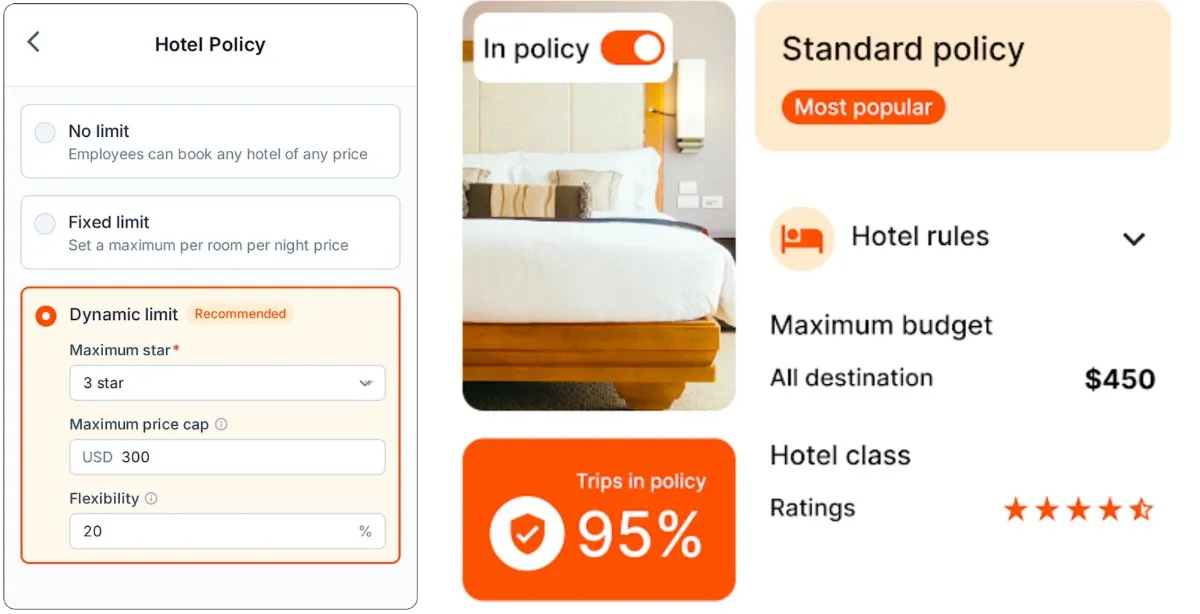
The five tactics above describe what enforcement should look like. ITILITE’s policy and approvals module was built around them: policy creation, approvals, and out-of-policy controls live in the same workflow as booking, expense, and card spend.
On the creation side, admins configure:
- Approval workflows by department, trip type, spend threshold, employee level, or project code
- Field-level expense rules: amounts, dropdowns, toggles, even formula fields
- Per diem rates by location and employee role, with different caps across cities
- Bulk approval-rule import via SFTP for large hierarchies
- Up to nine custom fields (cost center, project, department) that flow into reports and ERP exports
On the enforcement side, the platform handles:
- Pre-booking flagging or blocking of out-of-policy flights, hotels, and rental cars
- Soft enforcement with a reason field and cost comparison for legitimate exceptions
- HRIS-driven approval routing from Workday, BambooHR, ADP, or Okta
- Project-code routing to the right approver for each job site or client
- A per-employee in-policy vs out-of-policy dashboard, no manual exports needed
- AI fraud detection for duplicate submissions, inflated amounts, and unusual vendors
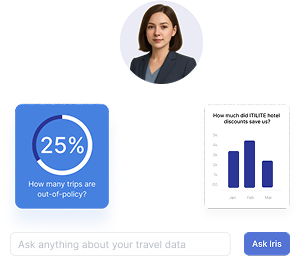
- Iris AI for natural-language queries: “show me employees who exceeded per diem last month” returns the answer without writing a query
Enforcement moves from post-trip audit to pre-trip control. The policy a finance team writes on Monday shows up in the booking interface every traveler uses on Tuesday, and the same logic governs the expense report on Friday.
Common T&E policy mistakes (and how to avoid them)
Seven failure modes show up repeatedly across finance teams we talk to:
- Rules too tight. One finance leader put it plainly: “Workarounds will be discovered by employees when they find the policies to be too restrictive.” A policy that bans all above-economy flights for 14-hour international trips gets ignored, not obeyed.
For the underlying tradeoff, see our analysis of strict vs flexible business travel policy approaches. - Manager rubber-stamping. The single most common enforcement gap. Use threshold-based auto-routing so managers don’t have to say “no” to their own reports.
- Static per diem across regions. A single $50/day meal cap punishes travelers in Manhattan and overpays travelers in tier-3 cities. Use GSA rates or a tiered structure.
- Policy as PDF, not workflow. If the policy lives in a PDF that nobody reads, it doesn’t exist. Embed it into the booking and expense platforms travelers actually use.
- Skipping rollout change management. One oil & energy HR lead described a failed earlier attempt: “we decided not to do it… folks push back… it just slows down the adoption.” Train travelers and approvers before go-live; announce the why, not just the what.
- No reimbursement SLA. If you don’t promise a cycle time, 21 days becomes 30, 30 becomes 45. Publish a 7-day target and track it.
- Never reviewing after publication. GSA rates change every year. Regulations change. Your company changes. A policy that hasn’t been touched in two years is already wrong somewhere.
How do IRS rules affect your T&E policy?
If your T&E policy doesn’t align with IRS rules, reimbursements can be recategorized as taxable wages, adding payroll tax, employee income tax, and compliance exposure.
Two things matter most:
- The “ordinary and necessary” standard. Per IRS Publication 463, a deductible business travel expense must be ordinary (common in your trade) and necessary (helpful and appropriate). Luxury upgrades and personal side trips generally don’t qualify.
- Accountable vs. non-accountable plans. Under an accountable plan, employees submit documented business expenses and return any excess advances; reimbursements are not taxable to the employee. Under a non-accountable plan, reimbursements are treated as wages and subject to payroll taxes. Accountable plans require three things: business connection, adequate accounting (receipts, dates, business purpose), and return of excess advances.
If you serve U.S. government contracts, you’ll also need to reference the Joint Travel Regulations (JTR) for per-diem and allowance rules specific to federal-contract work.
For a practical walkthrough of how IRS rules shape what you can reimburse, see our employee expense reimbursement IRS rules guide.
T&E policy considerations by company size
One-size-fits-all policies don’t work. The right level of structure depends on headcount and travel complexity.
- Small business (1–50 employees). Start with a one-page policy. Pick one booking platform and require everyone to use it. Use flat per diems (simpler than regional tiers). Review every six months for the first year, then annually. Low-cost platforms, for example, ITILITE’s flat $10-per-trip pricing, let small teams get enforcement built-in without enterprise minimums.
- Mid-market (50–500 employees). Add threshold-based approval routing. Tie the policy to accounting and payroll integrations so reimbursements flow automatically. Start tracking compliance metrics: out-of-policy booking rate, average reimbursement cycle, exception volume. This is usually where a dedicated travel manager role becomes justified.
- Enterprise (500+ employees). Expect multi-entity support (for acquired companies), regional per-diem tiers, SSO and role-based permissions, accessibility compliance for the booking platform (ADA/Level Access is a real dealbreaker for some industries), and full audit-trail retention. Enterprise policies also typically need joint-travel regulation compliance if any work touches federal contracts, and full mobile-capture workflows for receipt collection.
FAQ
What does T&E stand for in business?
T&E stands for travel and expense. A T&E policy covers all costs tied to business travel, flights, hotels, meals, ground transportation, event registrations, and related incidentals. Some companies use “T&E” to mean “travel and entertainment,” which additionally covers client meals, events, and gifts.
How often should a company update its T&E policy?
At minimum, annually. Trigger an interim review any time GSA per diem rates are updated, tax rules change, the company goes through M&A or opens a new region, or travel volume shifts materially (such as a post-pandemic return-to-travel spike).
What’s the difference between a T&E policy and an expense policy?
A T&E policy specifically covers business travel-related expenses. An expense policy is broader and typically also includes non-travel costs like office supplies, software subscriptions, professional development, or home-office stipends for remote employees.
What’s a reasonable reimbursement cycle?
Target 7 business days from approval to deposit for modern programs. A 21-day cycle, still common in legacy programs, forces employees to float business expenses on personal cards for three weeks, which hurts morale and slows expense submission.
How should a T&E policy handle out-of-policy bookings?
Allow them, but require a short written justification at booking time and route to a designated approver. Silent banning of out-of-policy options causes travelers to work around the system; explicit exception workflows maintain the policy without creating a trap for legitimate business needs.
What’s the average cost to process one expense report?
Around $58 per report, with a 19% error rate and $52 per correction on manual processing, per GBTA Foundation benchmarks. Automation typically cuts processing cost by 60%+ and error rates by half.
Can a small business get by without a formal T&E policy?
Technically yes, and practically, no. Even a five-person team that travels monthly will see inconsistent spending within 90 days. A one-page policy with per diems, booking channels, and approval rules takes an afternoon to write and prevents arguments about expense submissions for years.
What are the most common mistakes in enforcing a T&E policy?
Three: (1) rules that are too tight, which employees work around; (2) managers rubber-stamping approvals to avoid conflict; and (3) treating the policy as a PDF stored on a shared drive rather than a live workflow embedded in the booking and expense platforms employees actually use.

Vishal Jetley is Director of Marketing at ITILITE, where he writes about business travel, expense management, and corporate cards. Before ITILITE, he worked at HighRadius, helping scale finance-focused SaaS products for enterprise teams. His work focuses on travel operations, spend control, and modern finance workflows.
Control Costs, streamline travel with 24/7 support.
A fully integrated corporate travel management software that dramatically reduces spends while improving user experience




.jpeg)

%20(1).png)
%20(1).png)





.jpeg)


.jpeg)
.jpeg)

.webp)
.jpeg)
.jpeg)










.png)